About Eye in the Labyrinth
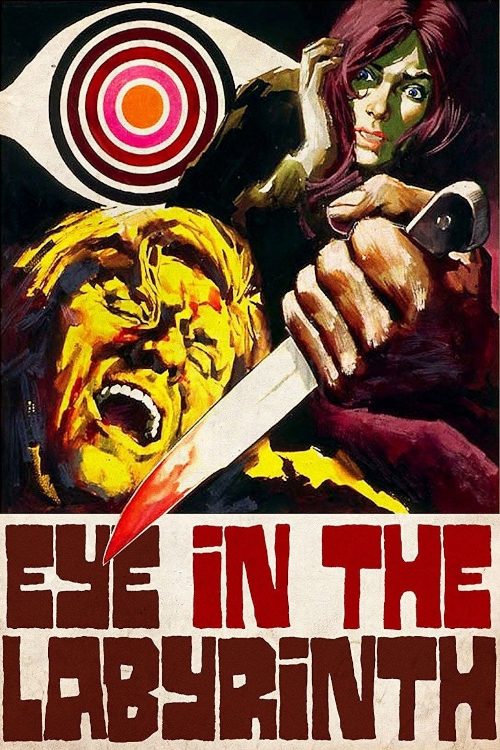
Julie is disturbed by the disappearance of her psychiatrist boyfriend Luca following a bizarre dream where she witnessed him murdered. She travels to a seaside village where he might be and encounters Frank, who tells her Luca has indeed been there. Julie's investigation leads her to the house of Gerta, where the mystery deepens among the odd characters residing at this artists enclave.
Giallo cinema often functions as a fever dream constructed from shards of shattered glass and lingering shadows, and Eye in the Labyrinth stands as a quintessential artifact of this Italian aesthetic. While many films of the era leaned heavily into the slasher formula, this 1972 production chooses to anchor its unease in the psychological displacement of its protagonist. Julie finds her reality fracturing after a haunting nocturnal vision involving her partner, a narrative device that effectively blurs the line between premonition and paranoia. By shifting the setting from urban decay to a sun-drenched seaside enclave, the film plays with the contrast between the perceived safety of a coastal retreat and the hidden malice lurking within an artist colony. It is a stylistic choice that elevates the mystery beyond a simple procedural, inviting the audience to question the reliability of memory itself.
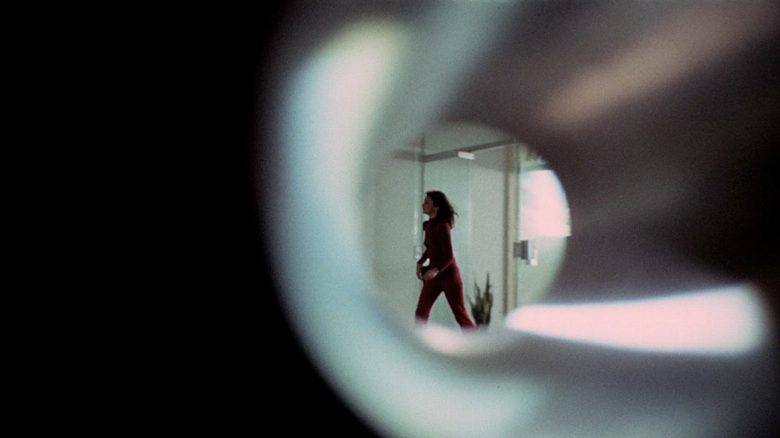
The film benefits immensely from an ensemble cast that anchors the surreal proceedings in a sense of grounded, albeit eccentric, humanity. Horst Frank and Alida Valli bring a gravitas to their roles that keeps the tension simmering even when the plot teeters on the edge of the uncanny. For viewers who appreciate the slow-burn suspense found in mid-century European thrillers, this picture offers a masterclass in atmospheric building. It avoids the frantic pacing of modern horror in favor of a deliberate, voyeuristic lens that forces the viewer to inspect every frame for clues. Fans of the golden age of Italian genre filmmaking will recognize the hallmarks of the period, from the deliberate color palettes to the unnerving musical cues that underscore the isolation of the characters.
What makes this feature particularly compelling today is its ability to tap into the universal fear of the unknown within one's own intimate relationships. It is not merely about a missing person, but about the terrifying realization that the person one loves might be a stranger. This thematic weight ensures that the movie remains relevant to modern cinephiles who gravitate toward psychological puzzles rather than mere jump scares. By avoiding the common pitfalls of its contemporaries, the film positions itself as a cerebral entry in the genre, perfect for late-night viewing when the boundaries between dreams and waking life feel most porous. It remains a fascinating study in how filmmakers of the early seventies manipulated visual language to keep audiences trapped in a constant state of uncertainty.
Cast(14)









Crew
Makeup Artist
Screenplay
Music
Director of Photography
Associate Producer
Producer
Editor
Assistant Editor
Similar Films