About SS Experiment Love Camp
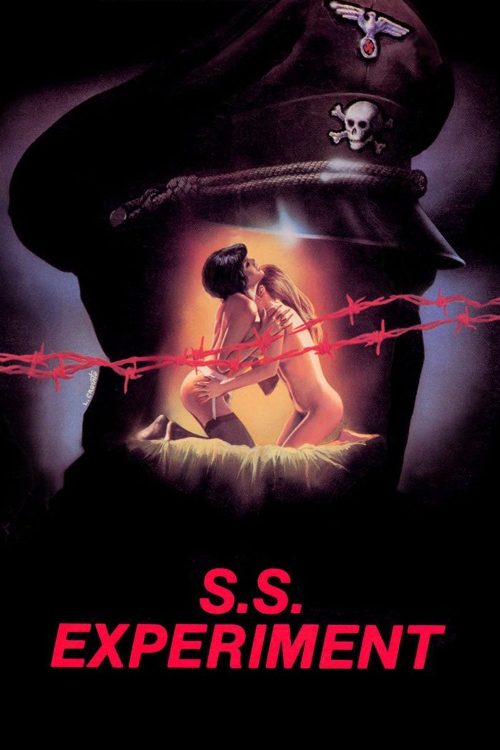
Near the end of WW2, prisoners of war are used in experiments to perfect the Arian race.
Cinema history is littered with works that challenge the limits of taste, and the 1976 Italian production SS Experiment Love Camp remains one of the most provocative remnants of the exploitation boom. Directed by Sergio Garrone, the film occupies a dark corner of the nazisploitation subgenre, a trend that gained significant traction in Europe during the seventies by blending historical trauma with extreme, often transgressive, narrative devices. While contemporary audiences might find its approach to such harrowing subject matter deeply polarizing, the film serves as a grim artifact of a period when Italian genre filmmakers were aggressively pushing boundaries to shock international markets. It operates less as a traditional war drama and more as a stylistic exercise in dread, utilizing the claustrophobic setting of a clandestine facility to explore themes of power, subjugation, and human endurance under the most monstrous of conditions.
For viewers accustomed to the polished storytelling of modern Indian cinema, where historical dramas often emphasize nationalistic pride or grand emotional arcs, this film offers a jarringly different experience. It eschews the sweeping scale of Tollywood or Bollywood epics in favor of a singular, oppressive focus on the psychological and physical degradation occurring within its borders. This is a work intended strictly for enthusiasts of grindhouse history and those interested in the fringes of European cult cinema, rather than a general audience. The film relies heavily on a bleak atmosphere rather than traditional heroic tropes, making it a challenging watch that prioritizes a nihilistic vision over historical accuracy or moral resolution.
Garrone, who navigated various pulp genres throughout his career, approaches the material with a cold, detached visual language that emphasizes the clinical horrors of the setting. The performances by Inga Alexandrova and the supporting cast are tailored to convey the desperation of captives trapped in an environment defined by cruelty. By stripping away any sense of comfort or hope, the production forces the spectator to confront the darkest impulses of human institutionalization. While its legacy is undeniably contentious, the movie acts as a stark reminder of how exploitation filmmakers once used the backdrop of world history to craft visceral, unsettling tales that remain etched in the annals of underground cult film history. It is a piece of cinema that continues to provoke debate regarding the ethics of representation and the thin line between historical commentary and sensationalism.
Cast(14)











Crew
Director
Sound
Writer
Assistant Editor
Makeup Artist
Assistant Director
Costume Design
Script
Production Director
Similar Films