About Frost
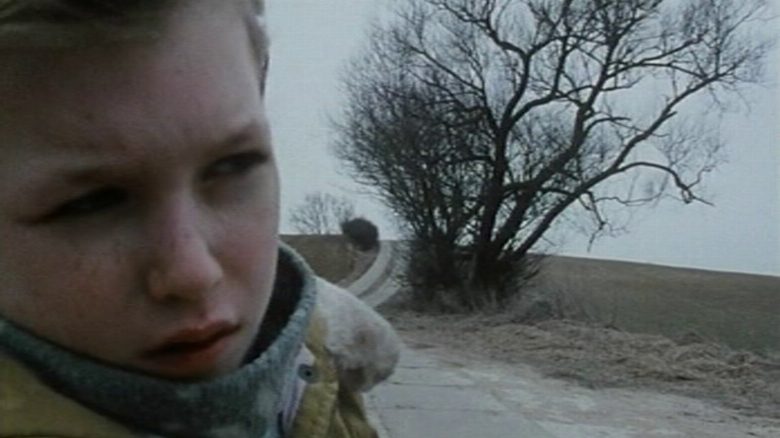
Time of darkness. Time of fire kindled against cold and fear. During the Holy Night, the seven year old Micha has to escape with his young mother Marianne from the violence of his drunken father... During their one week odyssey through frozen Germany, mother and son meet people to offer them shelter... Crushed by their own poverty, or dominated by their feelings of being lost, these people just hurt them deeper and they can be nothing other than stations of their continuous escape
Fred Kelemen carved out a singular space in European cinema with his 1997 feature Frost, a film that feels less like a traditional narrative and more like a haunting, visceral descent into the depths of human isolation. While contemporary Indian cinema often leans into high-octane spectacle or sweeping emotional melodramas, this German drama offers a stark, meditative counterpoint that focuses on the crushing weight of existential despair. The story follows a young boy and his mother as they flee a volatile household, embarking on a winter journey that strips away the comforts of home and replaces them with an unrelenting, icy reality. It is a work of profound atmosphere, where the environment itself becomes a character, mirroring the internal frigidity of the people the protagonists encounter during their desperate flight.
For viewers accustomed to the vibrant, often rhythmic pacing of South Indian or Bollywood productions, Frost serves as a demanding shift in perspective. It rejects the conventional beats of heroism and resolution, instead favoring a lingering, observational style that forces the audience to confront the raw vulnerability of its leads. The film is best suited for cinephiles who appreciate the slow cinema movement, as it challenges the viewer to find meaning in silence and the subtle shifts in lighting and shadow. By focusing on the cycle of trauma and the inability of broken individuals to provide solace to one another, Kelemen crafts a portrait of society that is as bleak as the frozen landscapes through which the characters traverse.
This film remains an essential touchstone for understanding the darker, more introspective side of nineties European independent filmmaking. Its relevance persists because it avoids easy sentimentality, opting instead to document the fragility of the human spirit when pushed to the absolute brink. Those who follow the evolution of global auteurs will find Kelemen’s command over visual language to be both challenging and deeply rewarding. Rather than offering a tidy conclusion, the film remains an open wound, capturing a specific week of survival that leaves both the characters and the audience fundamentally changed. It is a testament to the power of film to evoke a mood that stays with the viewer long after the screen fades to black, serving as a reminder that some of the most impactful stories are those that dare to stare directly into the abyss of human loneliness.
Cast(7)