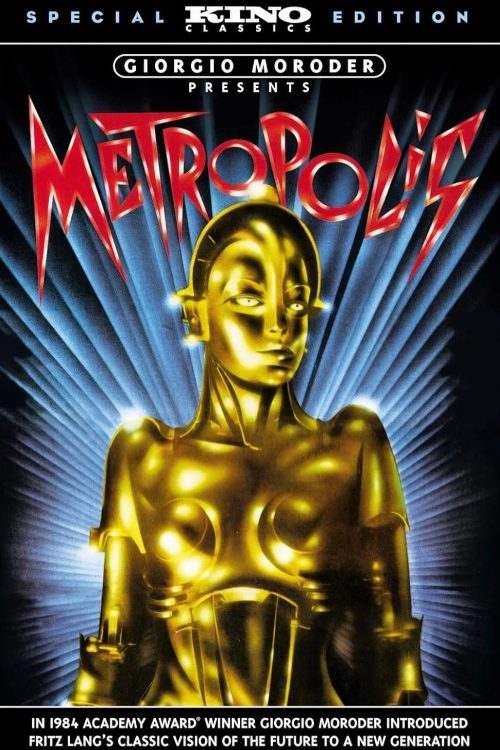
Giorgio Moroder's Metropolis(1984)
About Giorgio Moroder's Metropolis
In the city of the future, wealthy industrialists reign from their ivory towers while the workers toil away. However, a leader's decision to enlist a mad scientist could lead the city to ruin.
Few cinematic experiments carry the audacity of Giorgio Moroder turning a silent German masterpiece into a pulsating neon-soaked music video. By taking the 1927 silent classic and stripping away its original orchestral score, the disco pioneer transformed a somber exploration of labor and class struggle into a quintessential piece of eighties pop culture. This reimagining is far more than a simple restoration; it is a stylistic collision where the stark, industrial aesthetics of Weimar-era expressionism meet the synthesized, high-energy rhythms of the mid-eighties. It remains a fascinating artifact for those interested in how music can fundamentally alter the atmosphere and reception of a visual narrative, turning a critique of technocracy into a sensory spectacle.
The film operates within a unique space in cinema history, appealing primarily to fans of experimental editing and synth-pop enthusiasts who appreciate the audacity of re-contextualizing historical art. For viewers familiar with the evolving landscape of global cinema, it serves as a reminder of how directors often attempt to bridge the gap between high-concept artistic heritage and the commercial demands of a new generation. The inclusion of tracks by artists like Freddie Mercury and Adam Ant creates an auditory landscape that feels intentionally disjointed from the black-and-white visuals, forcing the audience to engage with the story of the city and its subterranean workforce through a completely different emotional lens. It is this friction between the antique imagery and the contemporary soundscape that gives the project its enduring, if polarizing, legacy.
While the core premise remains focused on the stark divide between those living in luxury and the laborers sustaining the metropolis, the presentation shifts the focus toward mood and rhythm. It is a mandatory watch for film buffs who enjoy dissecting the history of film scores and the evolution of the science fiction genre. For those accustomed to the elaborate production values of modern Indian cinema, where music and narrative are often inextricably linked to heighten the intensity of a scene, this film offers an early, albeit unconventional, example of how a soundtrack can be used to drive the pacing of an entire story. Moroder’s vision stands as a testament to the idea that a story can be told just as much through its beat as through its dialogue, making it a pivotal case study for anyone analyzing the intersection of music and moving images.
Cast(13)