
About Incident Light
In this poignant period drama set in 1960s Argentina, a young woman, struggling to raise her twin daughters alone after the tragic death of her husband, accepts the courtship of a charming but mysterious older suitor.
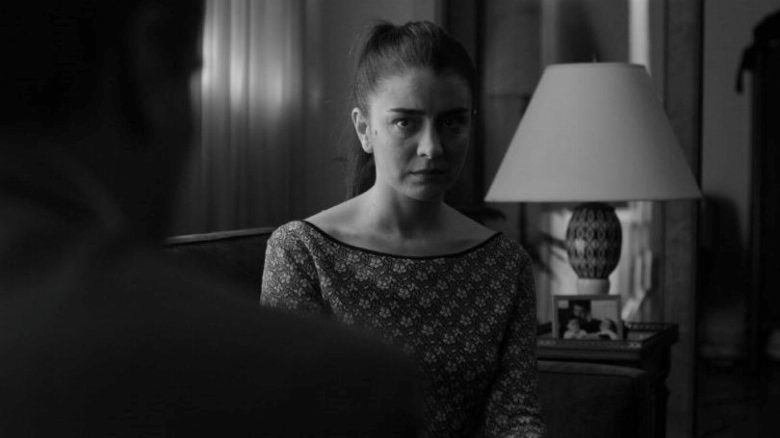
Argentine cinema has long mastered the art of quiet devastation, and Incident Light serves as a masterclass in the tension between societal expectations and the internal life of a grieving widow. Set against the stark, monochromatic backdrop of the 1960s, the film eschews the loud melodrama common in many global industries to focus instead on the claustrophobic reality of a woman tasked with navigating motherhood in isolation. For audiences accustomed to the high-octane emotional beats of Indian commercial cinema, where grief is often externalized through sweeping orchestral scores and dramatic confrontations, this film offers a refreshing, restrained alternative. It functions as a slow-burn character study that demands patience, rewarding the viewer with a deeply nuanced performance from Erica Rivas, whose portrayal of vulnerability is both fragile and fiercely resilient.
The narrative gains its strength from the arrival of an enigmatic stranger who enters the protagonist’s life under the guise of romantic salvation. This dynamic acts as a mirror for the pressures faced by women in mid-century Latin America, where economic stability was frequently tied to patriarchal approval. While Indian cinema has explored similar themes of widows reclaiming their identity in films like Water or Pagglait, Incident Light distinguishes itself through its clinical, observational aesthetic. It does not seek to provide easy answers or moralistic resolutions. Instead, it invites the audience to observe the protagonist’s silent calculations as she weighs the heavy burden of her independence against the security offered by a man she barely knows.
Viewers who appreciate the minimalist storytelling found in the best of Malayalam or independent Hindi cinema will find much to admire here. The film is perfectly suited for those who prefer subtext over exposition, as the most critical shifts in the plot occur in the pauses between sentences and the subtle shifts in facial expressions. Director Ariel Rotter crafts an atmosphere that feels like a fading memory, capturing the specific anxieties of a woman whose world has been narrowed by loss but whose spirit remains stubbornly intact. For those seeking a film that prioritizes atmosphere and psychological depth over traditional narrative arcs, this period piece stands as a compelling, if melancholic, exploration of what it means to start over when the past refuses to loosen its grip. It is a sophisticated addition to the global canon of domestic dramas, proving that the most profound conflicts are often those that occur behind closed doors.