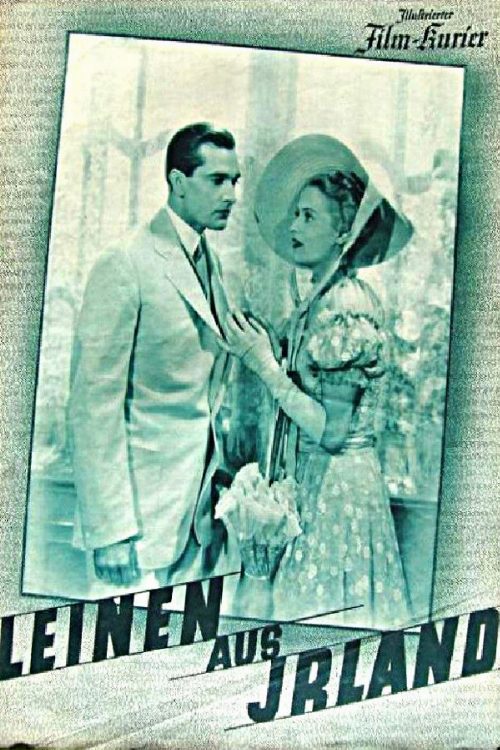
About Leinen aus Irland
Stepping back into the cinematic landscape of 1939, Leinen aus Irland emerges as a curious relic of German comedy from an era defined by profound global upheaval. While contemporary audiences often associate the late thirties with heavy political tensions, this film deliberately pivots toward the lighter side of domestic storytelling, focusing on the intricate dance of social misunderstandings and professional rivalry. The narrative centers on a textile merchant entangled in a web of complex business schemes, a premise that highlights the period fascination with industry and status. By leaning into the classic tropes of the comedy of errors, the director Heinz Helbig crafts a production that prioritizes fast-paced dialogue and character-driven humor over the gravity of the decade.
For followers of European film history, this project serves as a compelling case study of how the industry attempted to maintain a facade of normalcy through escapist entertainment. The ensemble cast, featuring established names like Otto Tressler and Irene von Meyendorff, brings a polished theatricality to the screen that was emblematic of German studio productions at the time. Unlike the high-octane thrillers or somber dramas that often dominate retrospectives of this period, this lighthearted feature offers a window into the lighter aesthetic choices favored by mainstream audiences. It captures a specific snapshot of mid-century performance styles, where the delivery is crisp and the physical comedy is calibrated for maximum engagement within the rigid confines of the studio system.
Viewers who enjoy vintage comedies or are interested in the evolution of European genre filmmaking will find this a fascinating watch. It is positioned as a quintessential example of the pre-war studio craft, where the focus remained squarely on witty banter and situational irony. While it lacks the modern pacing found in current Indian cinema or contemporary international hits, its historical value remains intact for those who appreciate the roots of the genre. By examining the film through the lens of its contemporary social climate, one can appreciate how comedy was utilized as a mechanism to divert attention from the shifting geopolitical currents. Whether one is a seasoned film buff or a casual observer of mid-century aesthetics, this production stands as a testament to the enduring appeal of the classic comedic setup, demonstrating that even amidst global uncertainty, the appetite for a well-structured laugh remains a constant human pursuit.
Cast(8)




Crew
Camera Operator
Director
Editor
Compositor
Screenplay
Production Director
Costume Designer
Similar Films