Once at Night(1971)
About Once at Night
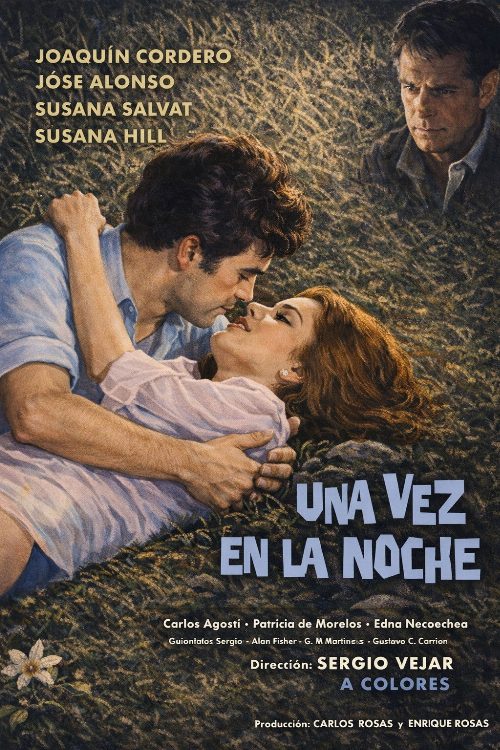
Landowner Raúl marries Norma, twenty-five years younger. His son Armando graduates and becomes his stepmother's lover. His father discovers them but remains silent.
The domestic landscape of 1971 Mexican cinema is often defined by its sharp explorations of social hierarchy and the simmering tensions hidden behind the gates of affluent estates. Once at Night serves as a quintessential example of this era, capturing a volatile intersection of generational divide and forbidden desire. While contemporary audiences might be accustomed to the high-octane emotional shifts found in modern Telugu or Hindi family dramas, this film offers a more restrained, atmospheric approach to the classic trope of the forbidden affair. It centers on the intricate power dynamics between an aging patriarch, his significantly younger bride, and a son who finds himself inextricably drawn into the orbit of his new stepmother. The narrative avoids the typical moralizing tone of the period, instead choosing to focus on the suffocating silence that follows the discovery of betrayal, positioning the father as a figure of quiet, perhaps even calculated, restraint.
The film is a fascinating artifact for those interested in international dramatic structures, particularly how it navigates the rigid patriarchal norms of its time. For viewers who enjoy the complex family sagas often found in Malayalam or Tamil parallel cinema, where the subtext is often more dangerous than the spoken word, this story will feel remarkably familiar yet distinctively rooted in its Spanish-language context. Edna Necoechea and Jose Alonso anchor the production with performances that rely heavily on the unspoken, creating a palpable sense of unease that persists throughout the runtime. It is not merely a tale of a love triangle, but a meditation on the fragility of familial legacy when confronted with the raw, impulsive nature of youth.
Those who appreciate character-driven narratives that eschew explosive action for the slow burn of psychological friction will find much to admire here. It sits at a unique crossroads of genres, blending the intensity of an action-oriented plot with the intimate, often claustrophobic scope of a tragic romance. By focusing on the internal lives of individuals trapped by their own choices, the film maintains a timeless relevance that transcends its 1970s origins. It is a compelling piece of work for cinephiles who seek to understand the evolution of the domestic thriller, offering a window into a specific cultural moment where the rules of the household were beginning to crumble under the weight of individual longing. The film stands as a testament to the power of subtle storytelling, proving that the most dramatic confrontations are often those that remain trapped behind closed doors.