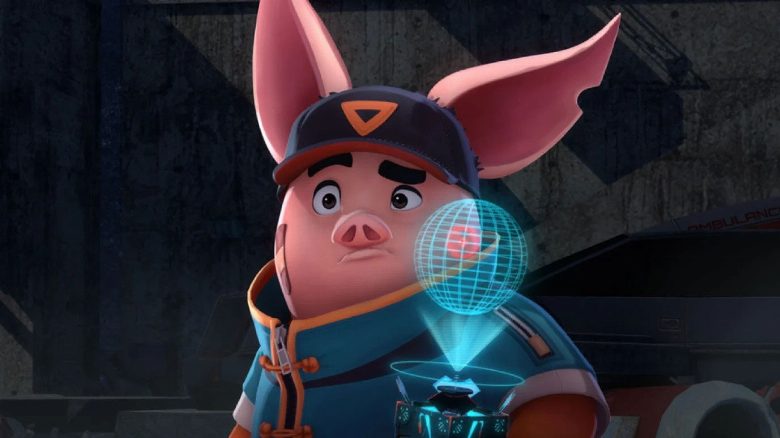

About Pigsy
In the future, technology and mankind are fused together. The world’s largest corporation, “Nirvana Corporation”, implants a “Nirvana ID” into newborns that not only serve convenience functions such as identification and payment but also preserve every person’s complete life record. Set in the distant future, lazy and selfish Pigsy embarks on a journey of deceit and swindling in an effort to attain a better life, only to find out that true happiness is closer than you think.
Animation in Taiwan has long sought a global footprint, and Pigsy emerges as a bold, visually striking attempt to blend traditional folklore with the cold, neon-drenched aesthetics of speculative fiction. By reimagining the classic character from the Journey to the West epic within a high-tech dystopia, the film moves away from the whimsical nature of its source material and instead offers a gritty exploration of corporate overreach. The narrative centers on a protagonist defined by his inherent vices, navigating a society where human existence is reduced to data points managed by a singular, all-powerful entity. This juxtaposition of ancient literary archetypes and futuristic surveillance culture provides a fresh layer of complexity, making the film feel like a darker, more cynical companion to modern animated features that usually prioritize charm over critique.
The film is particularly noteworthy for its commitment to a distinct visual language that feels both grounded and expansive, signaling a significant step forward for the local animation industry. For those familiar with the regional trends of East Asian cinema, Pigsy sits comfortably alongside recent efforts to push the boundaries of digital storytelling, moving beyond simple moral fables to address the anxieties of a hyper-connected age. Fans of cyberpunk themes and character-driven science fiction will likely find the journey of this flawed anti-hero particularly compelling, as his desperate pursuit of material status serves as a mirror to the pressures of contemporary consumerist society. It is a work that demands attention not just for its technical polish, but for its willingness to strip away the idealism typically associated with animated protagonists.
Beyond the flashy spectacle of its futuristic world, the film succeeds by grounding its high-concept premise in the messy reality of human greed and redemption. The voice cast brings a tangible layer of personality to the project, ensuring that even as the world around them becomes increasingly artificial and digitized, the emotional core remains resonant. For viewers who enjoy movies that balance fast-paced action sequences with pointed social commentary, this production serves as a thought-provoking entry point into the evolving landscape of Taiwanese animation. It positions itself as a sophisticated piece of entertainment that invites the audience to consider the cost of convenience in a world where every action is recorded and every ambition comes with a price tag.