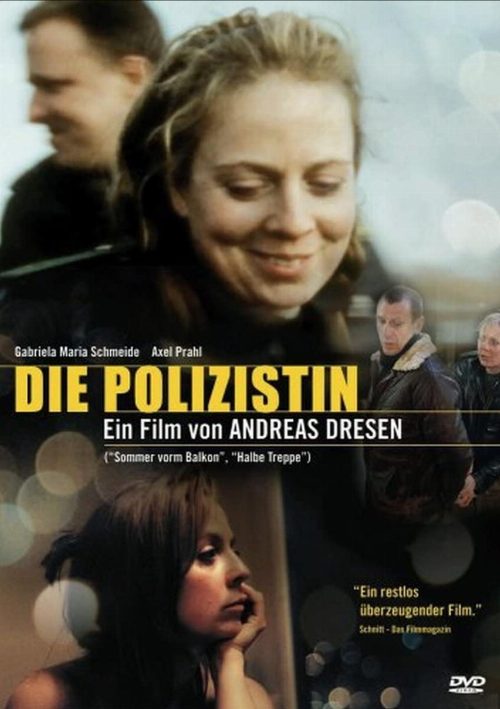
About Policewoman
A young police woman is faced with the difficulties between her responsibilities at work and her personal responsibilities.
Andreas Dresen has long been a master of capturing the raw, unvarnished pulse of everyday life, and his turn-of-the-millennium feature Policewoman remains a definitive study in the erosion of idealism. Unlike the hyper-stylized action thrillers that often define the law enforcement genre in global cinema, this German drama strips away the glamour of the badge to focus on the quiet attrition of a soul caught between institutional duty and domestic reality. The narrative follows a female officer navigating the stark streets of a changing society, where the weight of her uniform begins to mirror the crushing expectations of her private sphere. It is a film that functions less as a procedural and more as a character study, positioning the protagonist not as a hero, but as an individual struggling to maintain moral clarity while the machinery of her career slowly grinds away her empathy.
For audiences accustomed to the high-octane spectacles currently dominating the Indian cinematic landscape, this film offers a refreshing, grounded alternative. While industries like Tollywood or Bollywood frequently use police procedurals as vehicles for mass hero worship and explosive set pieces, Policewoman belongs to a tradition of European realism that prioritizes psychological nuance over external conflict. The film resonates with anyone interested in the human cost of public service, echoing the themes found in acclaimed gritty dramas that highlight the friction between professional obligation and personal identity. Gabriela Maria Schmeide delivers a performance of remarkable restraint, grounding the film in an authenticity that makes her character’s gradual disillusionment feel deeply personal rather than merely performative.
This work is particularly essential for viewers who appreciate the New German Cinema influence on modern storytelling, where the camera acts as a silent, observant witness to the mundane struggles of the working class. It serves as a stark reminder that the most compelling conflicts are often those that occur behind closed doors, away from the spotlight of public scrutiny. By sidestepping the tropes of the genre, Dresen creates a portrait that feels as relevant today as it did decades ago, proving that the complexities of the human condition remain a universal language. Whether you are a dedicated follower of international independent cinema or simply someone who appreciates a profound character arc, this film provides a meditative and honest look at what happens when the lines between one's job and one's life become dangerously blurred.
Cast(10)