About Taste of Cement
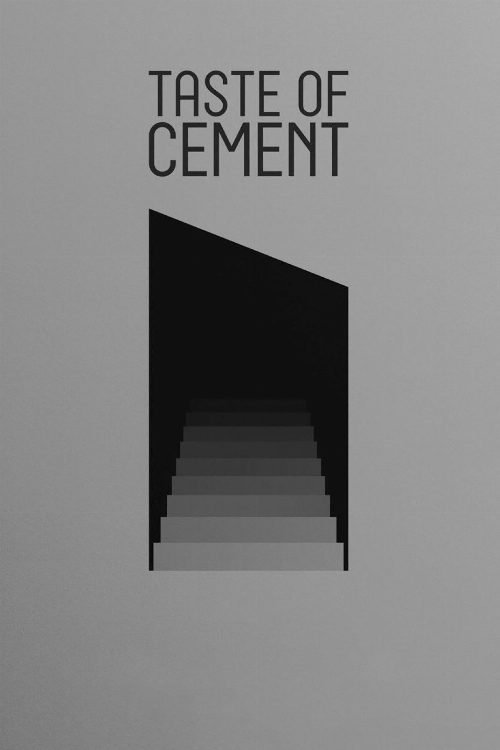
In Beirut, Syrian construction workers are building a skyscraper while at the same time their own houses at home are being shelled. The Lebanese war is over but the Syrian one still rages on. The workers are locked in the building site. They are not allowed to leave it after 19.00. The Lebanese government has imposed night-time curfews on the refugees. The only contact with the outside world for these Syrian workers is the hole through which they climb out in the morning to begin a new day of work. Cut off from their homeland, they gather at night around a small TV set to get the news from Syria. Tormented by anguish and anxiety, while suffering the deprivation of the most basic human and workers right, they keep hoping for a different life.
Ziad Kalthoum delivers a sensory masterpiece with Taste of Cement, a documentary that eschews traditional journalistic observation in favor of a haunting, visceral cinematic language. By juxtaposing the construction of a gleaming high-rise in Beirut against the systematic destruction of cities across the border in Syria, the film creates a profound meditation on the cyclical nature of architecture and ruin. It functions less as a narrative report and more as a poetic essay, capturing the physical exhaustion of laborers who are literally stacking the concrete that mirrors the rubble burying their own neighborhoods. For audiences accustomed to the high-energy storytelling prevalent in Indian cinema, this film offers a stark, meditative departure, focusing on silence and atmosphere rather than dramatic dialogue to convey the weight of displacement.
The film operates within a specific regional context that resonates deeply with global themes of migration and labor exploitation. By highlighting the restrictive curfews imposed on Syrian workers in Lebanon, Kalthoum exposes the invisible walls that cage those who are essential to urban development yet denied basic social inclusion. This thematic focus on the dehumanization of migrant workers serves as a poignant reminder of the human cost hidden beneath the polished surfaces of modern metropolitan growth. It is a work that demands patience and empathy, positioning the audience not merely as observers, but as witnesses to a state of perpetual limbo. The director utilizes industrial sounds—the rhythmic thumping of jackhammers and the grinding of machinery—as a sonic metaphor for the fractured psyche of men torn between their duty to build a new world and the trauma of watching their past crumble.
Viewers who gravitate toward thought-provoking international cinema or those with an interest in the intersection of human rights and urban sociology will find this documentary essential viewing. It is particularly striking for fans of non-fiction filmmaking who appreciate a visual-first approach, where the camera acts as a silent participant in the daily struggle for survival. As the construction site becomes a pressurized vessel for grief, Kalthoum masterfully draws a line between the static life of the refugee and the kinetic energy of the building project. This is a film for those who seek to understand the quiet, often overlooked tragedies of the modern age, offering a perspective that is as aesthetically stunning as it is deeply unsettling. It remains a powerful testament to the resilience of the human spirit when forced to exist in the shadow of conflict, far from the homes that are fading into memory.