
About The Blood Countess
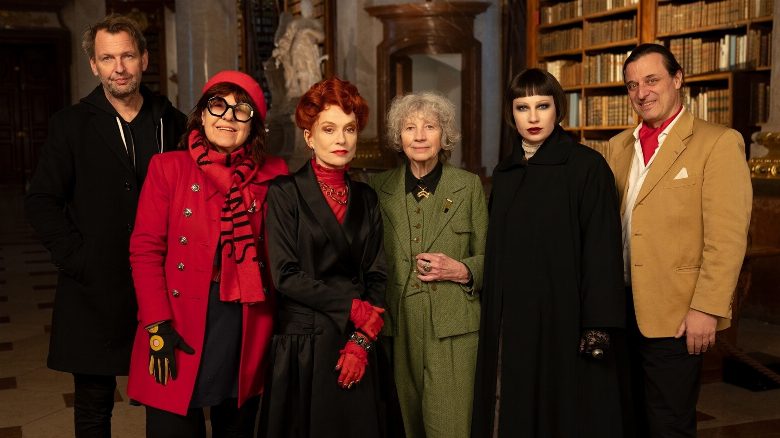
The Blood Countess and her maid embark on a quest for the red elixir of life and a book that threatens the vampire realm. Hot on their heels are a police inspector, two vampirologists, a vegetarian nephew and his therapist.
Ulrike Ottinger returns to the screen with a stylistic flourish that challenges the boundaries of traditional gothic cinema. The Blood Countess emerges as a sophisticated fusion of historical horror and surrealist drama, casting a long, crimson shadow over the German film landscape. By anchoring her narrative in a premise that pits ancient supernatural appetites against the mundane anxieties of a modern ensemble, Ottinger crafts a visual tapestry that feels both timeless and provocatively contemporary. The inclusion of Conchita Wurst in the titular role suggests a deliberate choice to lean into themes of performance and identity, which have long defined the director’s experimental body of work. Rather than relying on simple jump scares, the film positions itself as a cerebral exploration of vanity, legacy, and the insatiable thirst for power, inviting audiences to look past the surface of its macabre premise.
The narrative architecture is built around an unlikely pursuit, linking the Countess and her loyal companion to an eclectic group of pursuers, including a suspicious inspector and an odd assortment of academics and family members. This collision of the monstrous and the bureaucratic creates a dark, whimsical tension that distinguishes the project from the current wave of gritty, fast-paced horror exports. For admirers of German auteur cinema, this film serves as a reminder of the industry’s ability to weave folklore into biting social commentary. The presence of Birgit Minichmayr and Thomas Schubert further elevates the production, anchoring the more fantastical elements in grounded, nuanced performances that bridge the gap between human frailty and immortal ambition.
Viewers who gravitate toward the works of Jorg Buttgereit or the atmospheric dread of classic European art-house horror will find much to admire here. The film is tailored for an audience that appreciates slow-burn storytelling and a meticulous attention to costume and set design. It is not merely a tale of blood and shadows, but an investigation into the costs of eternal youth and the absurdity of those who try to police the supernatural. As it makes its way into the international circuit, The Blood Countess stands as a bold, eccentric entry in the genre, proving that the most terrifying monsters are often the ones who believe their own myths. Whether it succeeds as a commercial hit or remains a cult curiosity, it is undeniably a singular vision that demands to be seen by anyone invested in the evolution of European gothic traditions.