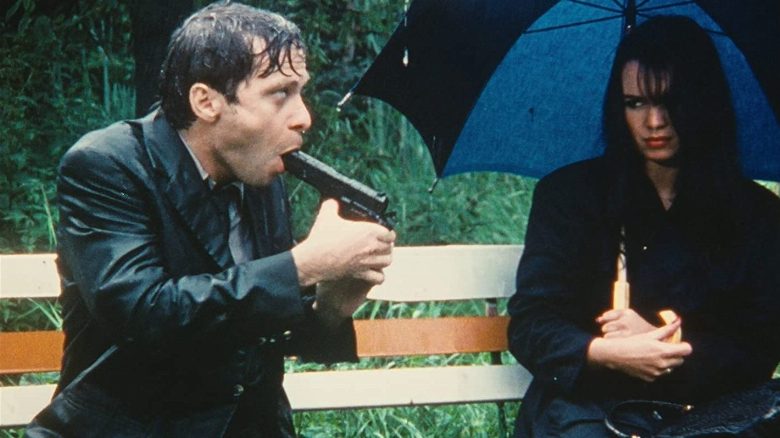

About The Death King
Seven episodes, each taking place on a different day of the week, on the theme of suicide and violent death.
Few films from the European independent circuit possess the chilling, intellectual rigor of Jorg Buttgereit’s 1990 cult classic The Death King. While contemporary Indian cinema often explores the intersection of tragedy and societal pressures through melodramatic or thriller lenses, this German production opts for a stark, structuralist approach that demands an entirely different kind of audience engagement. By tethering its narrative to the seven days of the week, the film transforms a heavy, often taboo subject into a methodical examination of human fragility. It stands as a pivotal work of transgressive art, stripping away the commercial polish of mainstream horror to offer a raw, unvarnished look at the finality of existence.
For enthusiasts of global cinema who appreciate the experimental spirit found in the works of international auteurs, this film provides a stark contrast to the narrative-driven storytelling found in regional Indian industries like the Kannada or Malayalam film scenes. While those industries are currently celebrated for their grounded realism and social commentary, The Death King operates in a colder, more clinical space. It is not a film for those seeking escapism or traditional genre thrills; rather, it is positioned for viewers who value philosophical inquiry and are prepared to confront the darker corners of the human psyche. The director, Jorg Buttgereit, has long been a polarizing figure in underground horror, and his work here showcases his commitment to testing the boundaries of the medium.
The cultural significance of such a film lies in its ability to provoke discourse without relying on the conventions of standard suspense cinema. In an era where modern platforms are saturated with high-octane action and formulaic plot twists, this piece remains a haunting outlier. Its influence can be felt in the way avant-garde filmmakers continue to utilize anthology structures to dissect complex themes. Those who appreciate the moody, atmospheric intensity of world cinema will find this journey both challenging and deeply memorable. It is a testament to the power of low-budget, high-concept filmmaking, proving that a singular vision, regardless of its bleak subject matter, can leave an indelible mark on the international film landscape decades after its initial release. By focusing on the daily erosion of hope, the movie creates a pervasive sense of dread that is as much about the silence between the scenes as it is about the explicit content captured on screen.