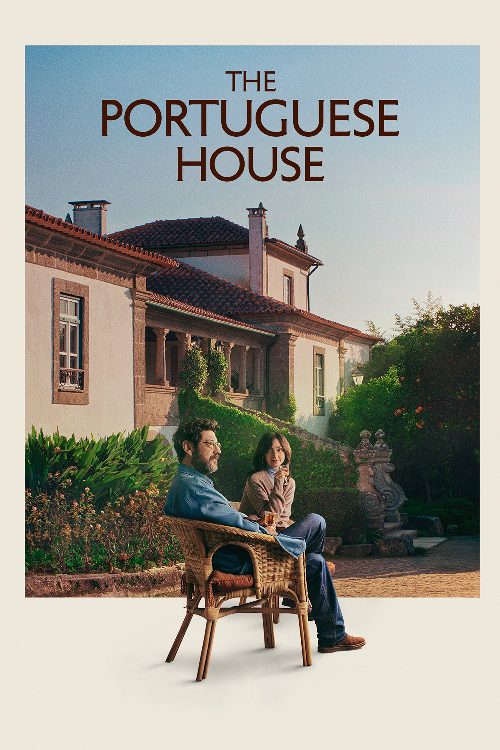
About The Portuguese House
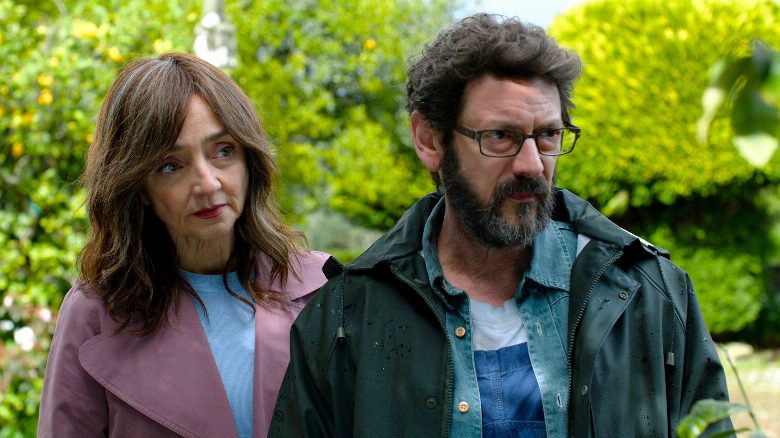
The disappearance of his wife leaves Fernando, a quiet geography teacher, completely devastated. Aimless, he assumes another man’s identity as a gardener on a Portuguese estate, where he forms an unexpected friendship with the owner, stepping into a new life that isn’t his own.
Stepping into the haunting melancholy of The Portuguese House, viewers are immediately struck by how the film chooses to observe grief not through loud outbursts, but through the quiet erosion of one man's sense of self. When Fernando, a geography teacher defined by his routine and precision, loses his spouse, the resulting vacuum pulls him into a desperate psychological migration. Instead of staying within the wreckage of his former reality, he drifts toward the lush, isolated landscapes of an estate in Portugal. By shedding his name and assuming the role of a gardener, he undergoes a silent transformation that touches on the universal human desire to vanish when the weight of existence becomes too heavy to carry alone.
This Spanish-language drama leans into the atmospheric tradition of European character studies, favoring long, contemplative takes over rapid narrative progression. For those accustomed to the high-octane emotional crescendos often found in contemporary Indian cinema, this film offers a refreshing shift in pace. It prioritizes the textures of the environment and the subtle non-verbal cues shared between the lead, played with understated intensity by Xavi Mira, and the enigmatic owner of the estate. The film functions less as a typical mystery and more as a meditation on the masks we wear. It explores how a stranger can sometimes provide a cleaner mirror for our souls than the people we have known for a lifetime, suggesting that the most profound connections are often those built on shared silences rather than exchanged histories.
The Portuguese House is positioned for an audience that appreciates slow-burn storytelling and the nuanced exploration of identity. It feels like a companion piece to films that interrogate the fragility of memory and the ease with which a person might invent a second life when the first one crumbles. Rita Cabaco and the supporting ensemble ground the surreal premise in a tactile, earthy reality, ensuring that the stakes feel deeply personal even as the plot ventures into the philosophical. By examining the intersection of loss and reinvention, the director crafts a narrative that feels both singular and strangely relatable. It is a sophisticated addition to the global drama circuit, inviting viewers to sit with the discomfort of uncertainty and the strange, quiet comfort that comes with starting over in a place where nobody knows your name.
Cast(29)