
Three Years Without God(1976)
About Three Years Without God
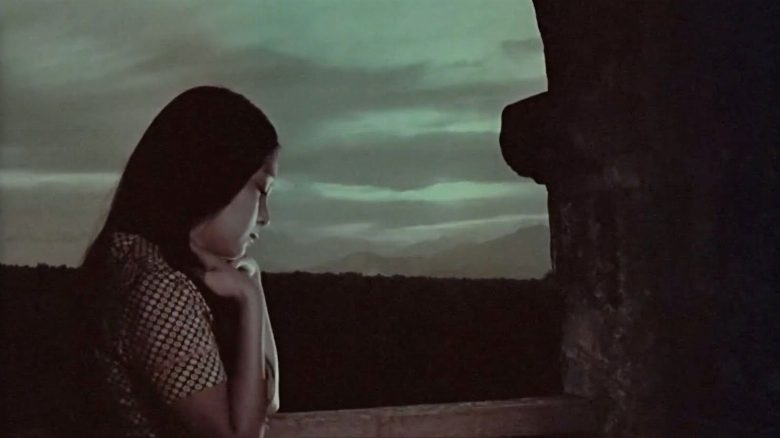
Set during World War II, a schoolteacher, Rosario, enters a forbidden relationship with a Japanese soldier, Masugi.
Venturing into the archives of mid-seventies cinema reveals Three Years Without God, a haunting narrative that finds its footing amidst the tumultuous backdrop of the Pacific theater during the Second World War. While the film is categorized as a romantic drama, it functions more as a somber meditation on the impossibility of human connection when geopolitical chaos tears the fabric of society apart. The story centers on Rosario, an educator attempting to maintain a semblance of order in her classroom, whose life becomes irrevocably complicated when she finds herself drawn to Masugi, a member of the occupying force. This central tension elevates the film from a standard wartime melodrama into a complex exploration of moral ambiguity, forcing the audience to navigate the friction between personal desire and national loyalty.
The film occupies a fascinating space in the history of regional storytelling, reflecting the lingering trauma and complex socio-political intersections that defined the post-war era in Southeast Asian cinema. By focusing on the quiet, domestic tragedy unfolding behind the front lines rather than the spectacle of combat, the director captures the suffocating atmosphere of an occupied territory with remarkable restraint. For viewers who appreciate the nuanced, character-driven dramas that characterized the prestige cinema of the seventies, this feature offers a rich, atmospheric experience. It stands as a testament to the era’s willingness to tackle uncomfortable narratives, prioritizing emotional honesty over the more conventional heroic arcs often found in war films of that generation.
Nora Aunor delivers a performance defined by internal conflict, grounding the film in a reality that feels both fragile and profound. Her portrayal of a woman caught between the expectations of her community and the magnetism of an outsider provides the heartbeat of the production. Christopher de Leon complements this with a portrayal that avoids the typical villainous tropes, opting instead for a portrayal of a man stripped of his identity by the demands of imperial service. This collaboration remains a landmark moment for those interested in the evolution of dramatic acting in the region. Fans of contemplative, slow-burn cinema who enjoy films that prioritize subtext and atmospheric tension will find this work essential viewing. It is a striking reminder of how historical narratives, when stripped of grandiosity and focused on individual human cost, leave the most enduring impression on the viewer long after the final frames fade into silence.
Cast(17)