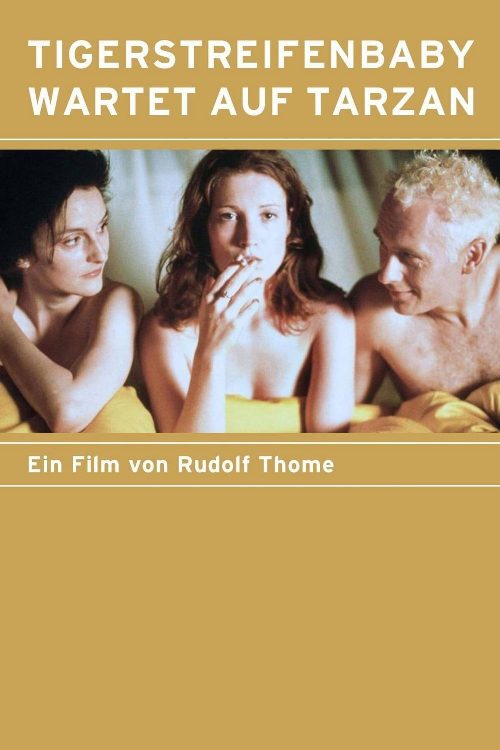
Tigerstripe Baby Is Waiting for Tarzan(1998)
About Tigerstripe Baby Is Waiting for Tarzan
Time traveler Frank is picked up by Luise and Theo while on their way to Berlin. Frank wants to find author Laura Luna and take her to the future with him. Frank finds Laura and they become a couple, but Luise shows up and makes it a menage a trois.
The intersection of science fiction and intimate character study often yields experimental results, and the 1998 German drama Tigerstripe Baby Is Waiting for Tarzan stands as a peculiar artifact of that era. Rather than leaning into the high-octane spectacle typically associated with temporal displacement narratives, the film prioritizes the strange, erratic rhythms of human connection. The story follows a traveler who arrives from a different era, only to find himself entangled in an increasingly complicated domestic arrangement. By stripping away the grand mechanics of time travel to focus on the interpersonal friction between a few isolated individuals, the production creates a surreal atmosphere that feels more like an avant-garde stage play than a standard genre exercise.
For viewers accustomed to the polished, high-budget science fiction tropes prevalent in modern global cinema, this film offers a starkly different aesthetic experience. It aligns more closely with the introspective, low-fi German dramas of the nineties that sought to challenge narrative conventions through offbeat dialogue and unpredictable character motivations. The presence of performers like Cora Frost and Herbert Fritsch grounds the bizarre premise, allowing the audience to engage with the emotional vulnerability of the protagonists rather than the logistics of their situation. Because the film avoids the trap of explaining its own supernatural elements, it invites a more interpretive viewing experience, appealing to fans of cerebral cinema who prefer questions over resolutions.
The cultural landscape of 1998 German film was marked by a desire to break away from traditional storytelling, and this project exemplifies that push toward the unconventional. It serves as a reminder of how European independent filmmakers during this period used genre elements as a mere framework to explore themes of jealousy, longing, and the inherent instability of romantic partnerships. While contemporary audiences might find the pacing deliberate, those who appreciate the intersection of existential philosophy and quirky drama will likely find the evolving dynamic between the lead characters compelling. It remains a fascinating deep cut for cinephiles interested in the evolution of European character-driven narratives, standing as a testament to a time when directors were eager to experiment with the boundaries of speculative fiction. Whether viewed as a cryptic romance or a dry social satire, the film retains a distinct identity that persists long after the credits roll.