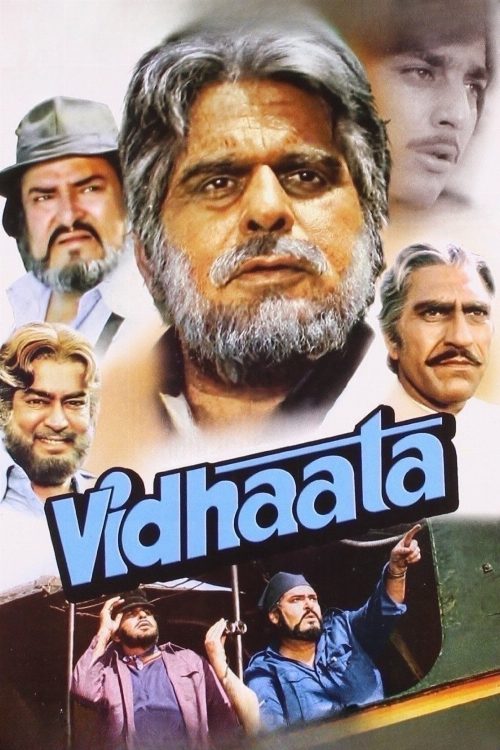
About Vidhaata
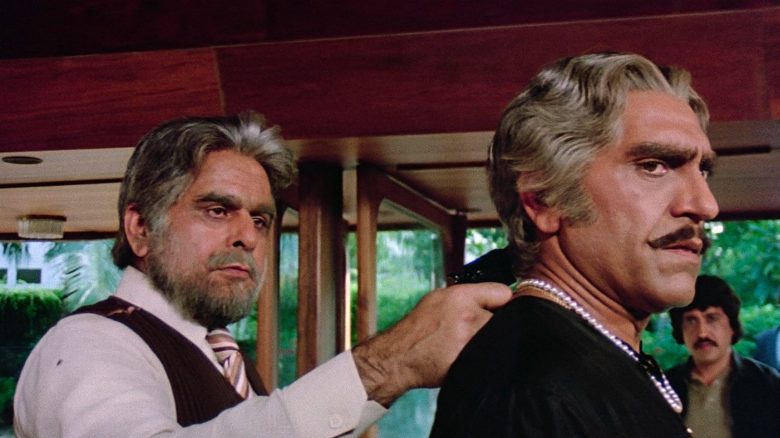
When a Police inspector is killed by a band of thugs, his grieving father Samsher Singh seeks justice. Pratap Singh has left behind a pregnant widow, who dies in chidbirth, leaving Samsher to bring up the child Kunal. The transformation of Samsher Singh (a locomotive engine driver) into Sobhraj, multi millionaire and owner of a vast network of business. Kunal is brought up by Abu Baba, a servant of Sobhraj to be honest, upright, and very independent minded. Durga, the daughter of a former employee of Sobhraj, who is serving time and Kunal fall in love. This not acceptable to his grandfather, though Abu Baba approves of the relationship. Disaster strikes when an attempt is made to separate the lovers. The life of Samsher Singh alias Sobhraj begins to unravel from here. How Kunal's ethical upbringing by his foster-father, and his financial and business circumstances of his grandfather meet in a titanic conscience clash and how he resolves matters is at the nexus of the plot.
The 1982 Hindi classic Vidhaata stands as a monumental entry in the annals of commercial Indian cinema, capturing the turbulent intersection of moral duty and the corrupting influence of unchecked power. Directed by Subhash Ghai, the film showcases the director's early mastery of the multi-starrer formula, a trend that would define the Bollywood landscape for the following decade. By casting legendary actors like Sanjeev Kumar and Dilip Kumar alongside a young Sanjay Dutt, the film functions as a masterclass in screen presence, pitting seasoned veterans against the rising stars of the era. The narrative revolves around a man who transforms from a modest railway worker into a titan of industry, only to find that his empire is built on a foundation of vengeance that threatens to consume his own grandson.
This film is essential viewing for those interested in the evolution of the Indian action-drama archetype, as it moves beyond simple tales of good versus evil to explore the psychological toll of living a double life. The central tension is not merely between criminals and law enforcement, but within the domestic sphere, where the grandfather’s ruthless pragmatism collides with the grandson’s idealistic moral compass. It serves as a compelling study of how trauma shapes a patriarch and how the subsequent cycle of secrecy impacts the next generation. The inclusion of Amrish Puri adds a layer of visceral intensity that anchors the film in the gritty, high-stakes atmosphere characteristic of eighties Hindi cinema.
Audiences who appreciate complex character arcs and the grand, operatic scope of classic South Asian storytelling will find much to admire in this production. It is positioned as a quintessential family saga that balances high-octane sequences with deep emotional stakes, making it an ideal choice for viewers who enjoy films that grapple with the weight of legacy and the cost of retribution. While the aesthetic reflects its time, the underlying themes of inheritance, ethical conflict, and the struggle for identity remain timeless. Vidhaata is more than just a crime drama; it is a profound look at how the past dictates the future, securing its status as a vital chapter in the history of Hindi-language films that helped define the blockbuster sensibilities of a generation.
Cast(16)