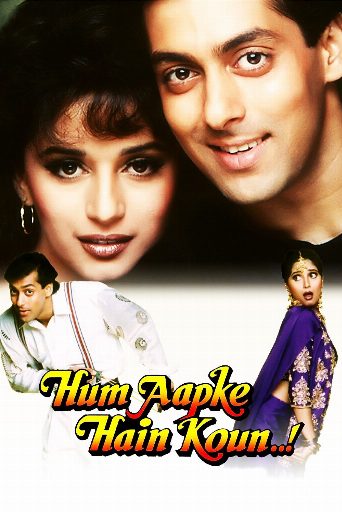
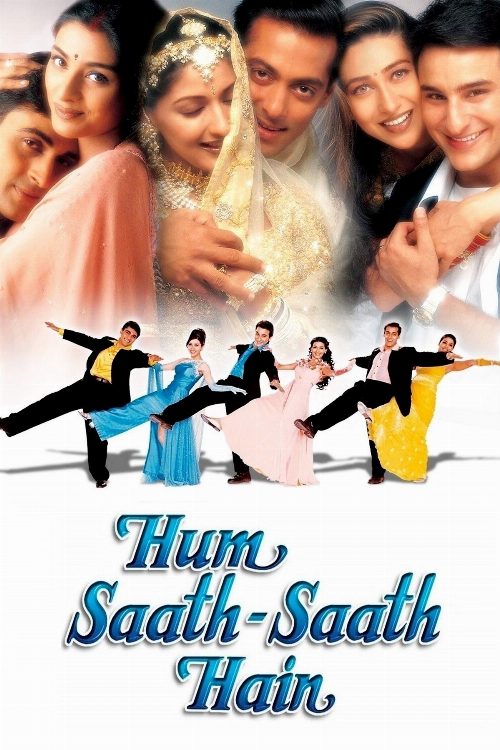
About Hum Saath Saath Hain
A wealthy businessman's traditional family celebrate their togetherness when his three sons get married, but slowly find themselves growing apart after a misunderstanding.
Cinema in the late nineties reached a fascinating zenith with the release of Hum Saath Saath Hain, a film that stands as a definitive artifact of the era's obsession with grand, idealized domestic harmony. While the Hindi film industry often oscillated between gritty action and rebellious youth dramas during this period, this production chose to double down on the concept of the extended household as a sacred, impenetrable unit. It functions as a meticulous study of traditional values, focusing on the interconnected lives of a patriarch and his three sons. By centering the narrative on the intricate dynamics of marriage and household hierarchies, the film taps into a deep-seated cultural yearning for stability, presenting a world where every conflict is meant to be resolved through patience and unwavering devotion to the collective unit.
The brilliance of this project lies in its unabashed commitment to the aesthetic of the quintessential family saga. It arrived at a time when audiences were increasingly drawn to high-production-value narratives that celebrated cultural roots, making it a cornerstone for viewers who appreciate stories about legacy and sacrifice. The director, Sooraj Barjatya, solidified his reputation here as a master of the wholesome genre, creating a visual language of vibrant festivities and synchronized rituals that defined his unique brand of storytelling. For those who enjoy character-driven dramas that prioritize emotional stakes over visceral thrills, this film offers a soothing, albeit highly polished, reflection of societal expectations. It remains essential viewing for students of Bollywood history who want to understand why specific tropes regarding sacrifice and sibling loyalty became so deeply embedded in the mainstream consciousness.
Modern audiences might view the film as a relic of a bygone cinematic philosophy, yet its enduring popularity speaks to the comfort found in its predictable, moralistic structure. It does not aim to subvert the expectations of the genre; rather, it seeks to perfect them, wrapping the audience in a warm blanket of familiarity. Those who appreciate the ensemble performances of stars like Salman Khan, Saif Ali Khan, and Mohnish Bahl will find a compelling showcase of their early career range. Whether viewed as a sentimental classic or a cultural time capsule, the film serves as a reminder of a period when the Hindi film industry was deeply invested in the grand, operatic staging of the everyday lives of the wealthy. It is a quintessential piece for anyone interested in how Indian cinema historically crafted its most beloved narratives around the hearth and home.
Cast(27)