Violent Panic: The Big Crash(1976)
About Violent Panic: The Big Crash
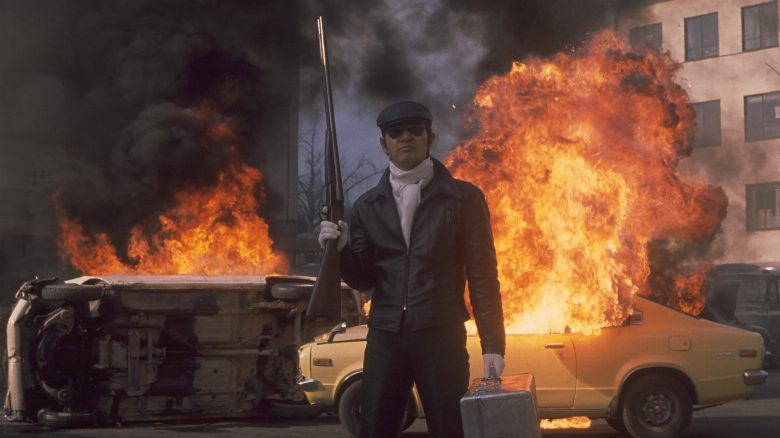
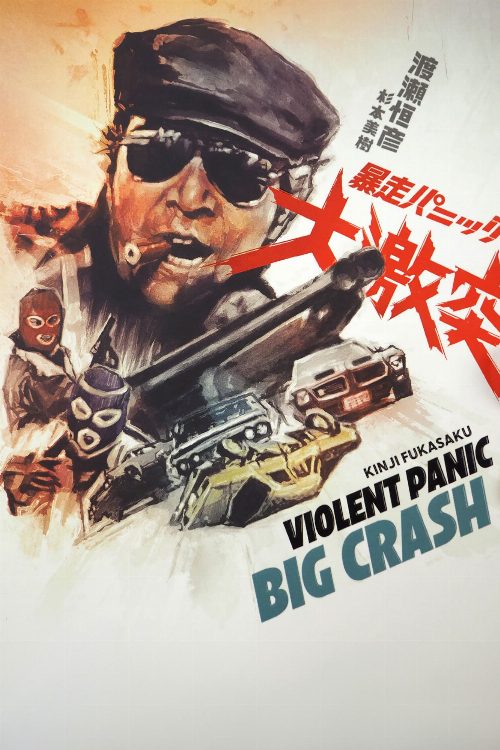
Takashi, a bank robber, dreams of his final heist and escaping to Brazil... but in his way, stands a woman that loves him, his dead partner's brother, a corrupt cop, a motorcycle gang and every police officer in the Kanto region.
Kinji Fukasaku was a filmmaker who thrived on the raw energy of urban decay, and Violent Panic: The Big Crash stands as a quintessential example of his relentless kinetic style. Released during a period when Japanese cinema was pivoting toward grittier, more visceral portrayals of underworld desperation, this film captures a feverish intensity that feels lightyears ahead of its 1976 origins. While contemporary audiences might associate the heist genre with methodical planning and slick execution, this particular story operates on pure, unadulterated adrenaline. It follows a protagonist whose singular goal is to secure a ticket out of his grim reality, yet he finds himself trapped in a tightening noose of societal and criminal pressure. The narrative functions less like a traditional crime caper and more like a high-speed descent into chaos, perfectly mirroring the volatile temperament that defined the director’s most iconic works.
The film is essential viewing for those who appreciate the evolution of action cinema, particularly for fans of the yakuza and exploitation eras who enjoy seeing how tension is built through sheer movement rather than quiet exposition. Tsunehiko Watase delivers a performance that anchors the madness, portraying a character whose desperation is palpable and infectious. By weaving together the competing interests of a motorcycle gang, a compromised law enforcement official, and a tangled web of personal betrayals, the movie transforms a standard robbery premise into a sprawling, multi-layered conflict. It captures a specific cultural moment in Japan where the boundaries between the criminal underground and the establishment seemed increasingly porous, a theme that resonates deeply with the current global interest in hardboiled international thrillers.
What makes this feature stand out in the broader landscape of seventies genre filmmaking is its refusal to slow down for the sake of emotional comfort. It is positioned as an uncompromising look at how greed and loyalty collide under extreme duress. Viewers who gravitate toward the restless, handheld aesthetic that influenced modern directors like Quentin Tarantino or the intense pacing of classic Hong Kong action will find much to admire here. It is not merely a story about a heist gone wrong; it is an exploration of a man being systematically dismantled by the world around him. For cinephiles interested in the history of Japanese action, this film serves as a vital bridge between the stylization of the past and the hyper-kinetic violence that would come to define the genre in later decades. Its legacy remains firmly rooted in its ability to maintain a suffocating sense of urgency from the opening frame until the final, breathless encounter.
Crew
Screenplay
Sound Recordist
Director
Lighting Technician
Editor
Director of Photography
Art Direction
Original Music Composer
Similar Films