About Winnie-the-Pooh
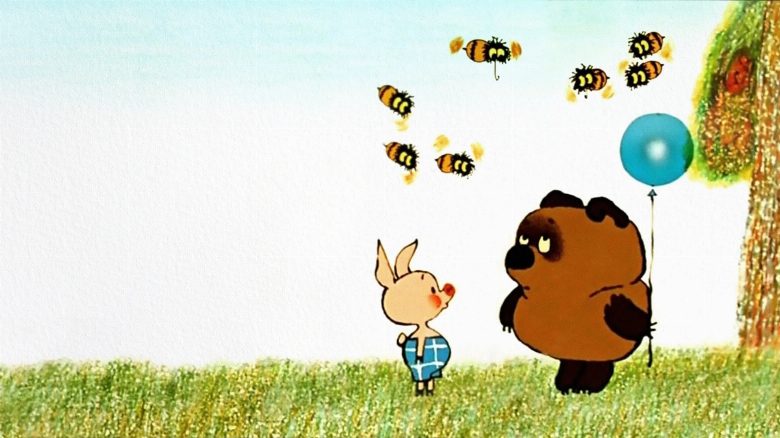
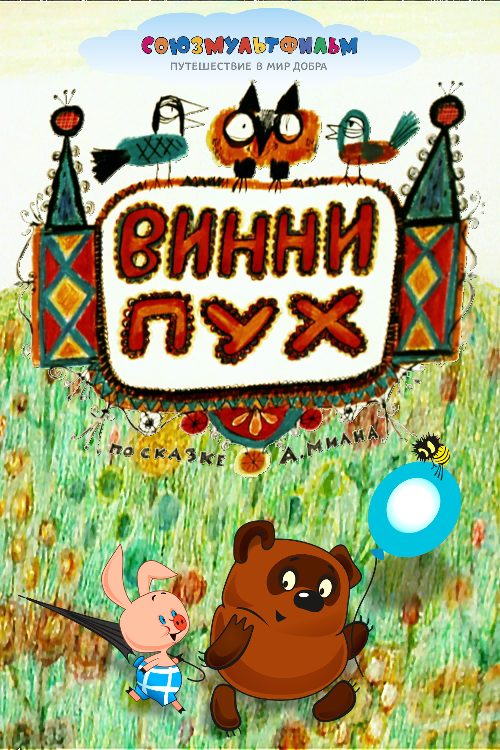
According to Winnie-the-Pooh himself, bears love honey very much. That's why it always runs out very quickly. And you can't do without honey, so Winnie, along with Piglet, sets off for a tall tree with a beehive hanging from it. Winnie fearlessly climbs up to the beehive on a balloon, singing a song about a little cloud.
Stepping away from the polished, vibrant aesthetic of Western animation, the 1969 Soviet short film Winnie-the-Pooh offers a minimalist, philosophical take on the beloved bear that feels strikingly distinct from its international counterparts. Directed by Fyodor Khitruk, this Russian adaptation strips away the commercial polish of the franchise to focus on a dry, existential wit that resonates deeply with adult viewers while retaining a gentle appeal for children. The art style is defined by clean, pencil-drawn lines and a muted color palette, a stylistic choice that emphasizes the whimsical character dynamics over elaborate visual spectacle. For audiences accustomed to the high-gloss production values of modern Indian animation or mainstream global studios, this Russian classic serves as a masterclass in how much personality can be conveyed through simplicity and clever dialogue.
The narrative centers on the bear and his loyal companion, the small and jittery Piglet, as they embark on a deceptively simple mission to secure honey. While the premise is familiar, the execution is entirely unique, characterized by a rhythmic, almost meditative pacing that highlights the comedic frustrations of the main character. Much like the nuanced character dramas found in contemporary Malayalam or independent Hindi cinema, the film relies heavily on the internal logic of its protagonists rather than external conflict. The voice acting, particularly the performance by Evgeni Leonov, provides a gravelly, endearing soul to the lead, turning a straightforward foraging trip into a series of relatable blunders. This version of the character is defined by his philosophical musings and a persistent, mild-mannered stubbornness that makes his failures feel like profound life lessons.
Viewers who appreciate animation as a form of high art rather than just a medium for spectacle will find this film essential viewing. It exists in a space where humor is derived from the absurdities of daily life, making it a perfect match for fans of character-driven storytelling. While it remains a staple of Eastern European cinematic history, its themes of friendship and the pursuit of simple pleasures are universal enough to transcend language barriers. By ignoring the established conventions of the source material and reimagining the bear through a distinctly Soviet lens, Khitruk created a timeless piece of media that proves that even the most iconic literary figures can be successfully reinvented with enough creative courage. It is a quiet, thoughtful, and thoroughly charming experience that reminds us why stories about a honey-loving bear continue to captivate the imagination across all cultures.
Cast(3)

Crew
Director
Art Direction
Writer
Editor
Novel
Director of Photography
Original Music Composer
Similar Films