About Alone and Unarmed
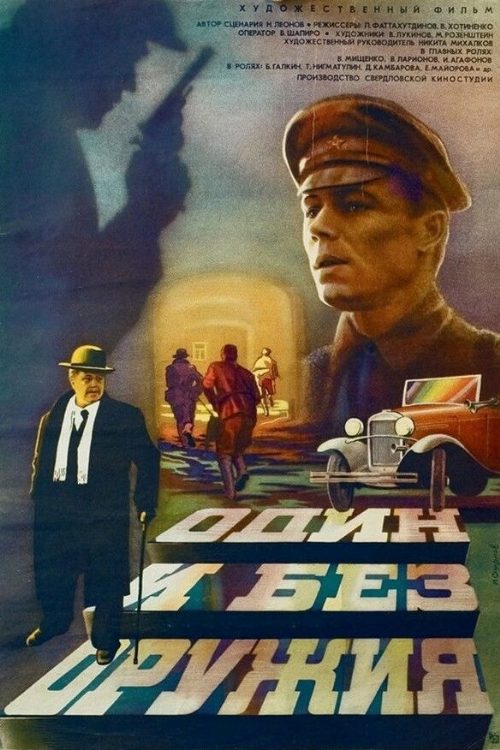
1927. A retired Red Army commander Constantine Vorontsov is appointed a Criminal Investigation Department head in a principal city of province. An experienced repeater named Korney shows up in the city. Thanks to a successfully performed operation a place of a local thieves gathering place is now known. But Korney, foreboding of an ambush, changes the place at the last moment. Vorontsov doesnt have enough time to warn all his colleagues and heads for the thieves meeting by his own.
Stepping into the rugged landscape of 1920s Soviet cinema, Alone and Unarmed offers a gritty, high-stakes look at the transition between revolutionary fervor and the harsh realities of provincial law enforcement. While many Indian cinema enthusiasts are accustomed to the grand, mythological struggles of Telugu epics or the intense, hyper-realistic police dramas emerging from the Malayalam industry, this 1984 production provides a starkly different aesthetic. Set during a volatile historical period where the authority of the new regime constantly clashed with entrenched criminal syndicates, the film captures a classic cat-and-mouse dynamic. It eschews the musical extravagance often found in Asian commercial cinema in favor of a lean, atmospheric approach to the action genre, focusing heavily on the psychological tension between a dedicated officer and a cunning underworld figure.
The narrative centers on Constantine Vorontsov, a former military man thrust into the bureaucratic and violent vacuum of civil policing. What makes this film stand out is its commitment to the lone-wolf archetype, a trope that resonates globally, from the classic Westerns of Hollywood to the mass-hero vigilante films popular in Tamil or Hindi cinema. Here, the director Vladimir Khotinenko utilizes the vast, unforgiving Soviet interior to turn a simple investigative mission into a test of survival. When the antagonist Korney orchestrates a shift in the criminal landscape, the protagonist is forced to abandon traditional tactical support, creating an isolation that heightens the suspense. This shift in momentum transforms what could have been a standard procedural into a visceral study of audacity and duty.
Viewers who appreciate the cat-and-mouse intensity of gritty crime thrillers will find much to admire in this vintage piece. It is particularly well-suited for those interested in the evolution of genre cinema, offering a window into how European directors framed the concept of the individual against an encroaching criminal tide during the eighties. Boris Galkin delivers a performance that anchors the film, imbuing his character with the weary resolve of a man who has seen too much war yet remains steadfast in his mission. For the modern audience, the film serves as a compelling reminder that the core ingredients of a great thriller—a focused lead, a formidable adversary, and a high-stakes ticking clock—remain universal. It is a lean, uncompromising work that remains a noteworthy chapter for anyone looking to explore the deeper cuts of international crime cinema.
Cast(8)