About Darna Mana Hai
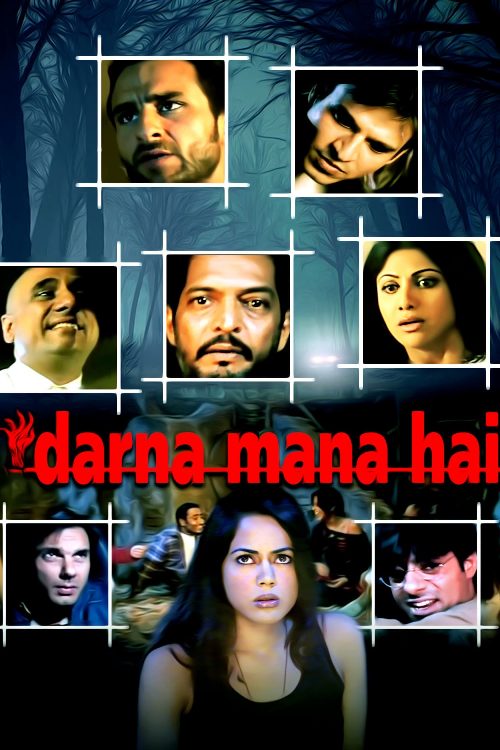
Stranded in an abandoned building, six friends relate scary stories while a crazed killer lurks in the forest.
Stepping away from the conventional tropes of Bollywood ghost stories that dominated the early millennium, Darna Mana Hai remains a fascinating anomaly within the Hindi horror landscape. Released in 2003, this anthology-style feature arrived during a period when the industry was heavily experimenting with urban thrillers and psychological suspense. By weaving together a series of distinct, unsettling narratives tethered to a central frame story, the film functions less like a standard slasher and more like a collection of macabre fables. The premise centers on a group of stranded travelers who attempt to pass the time by recounting tales of terror, a structure that allowed the production to explore various sub-genres of fear without being locked into a single narrative arc.
From a cultural perspective, the film stands as a bold departure from the song-and-dance spectacles that defined the era. It showcased a diverse ensemble cast, blending veteran performers like Boman Irani and Revathi with rising talents of the time, such as Isha Koppikar and Rajpal Yadav. This casting choice was pivotal, as it grounded the surreal and often bizarre sequences in recognizable human emotions. While the Hindi horror genre has evolved significantly since then, this project is frequently cited for its willingness to embrace an experimental format, challenging the audience to engage with multiple plot threads simultaneously. It serves as a time capsule of a moment when filmmakers were eager to push the boundaries of the mainstream, prioritizing atmospheric tension over heavy-handed melodrama.
Viewers who enjoy structural experiments or episodic storytelling will likely appreciate the pacing of this work. It is particularly well-suited for those who find the traditional, linear jump-scare tactics of modern Indian horror predictable or tiresome. Because each segment operates with its own internal logic and aesthetic, the film maintains a brisk rhythm that keeps the viewer guessing about the fate of the central group. Directed with a distinct stylistic flair, the movie demands a level of attention that is rarely asked of the audience in the broader commercial sphere. It is an essential watch for cinephiles interested in the history of experimental Hindi cinema and those who want to see how a talented group of actors navigated the tricky terrain of early 2000s psychological horror without relying on excessive spectacle or dated visual effects.
Cast(22)