About Saboot
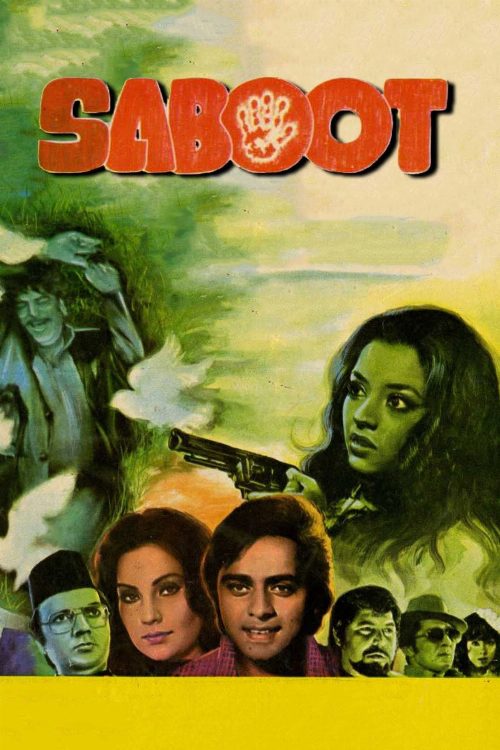
Seth Dharamdas(Trilok Kapoor) is a wealthy businessman. Dharamdas decides to sell one of his factories to Dhanraj(Prem Chopra). Dhanraj tells this to Ajit Roy(Om Shivpuri), his partner, who has plans of his own. However, circumstances make Dharamdas change his mind and he decides to cancel this deal. Dhanraj doesn't want this deal be cancelled and hence bribes Dharamdas's trusted employees into killing him. The quartet corner Dharamdas in a train and kill him after they get his sign over some crucial papers. They dispose off the dead body, making people think that Dharamdas has gone missing. But when the matter cools down, the villains start dying under mysterious circumstances. The investigation is handed over to the police. But is the killer a human, or has Dharamdas returned to exact his revenge?
Few corners of Hindi cinema possess the distinct, campy allure of the Ramsay brothers output, and Saboot remains a quintessential artifact of their eighties heyday. While modern audiences might associate Indian horror with polished supernatural thrillers or mythological folklore, this 1980 production captures a time when the genre relied on atmospheric dread, theatrical performances, and the looming threat of the afterlife. Directed by Tulsi Ramsay, the film functions as both a tense murder mystery and an early example of the signature slasher sensibilities that would eventually define the studio. By centering the narrative on a wealthy businessman whose sudden death triggers a chain of vengeance, the film taps into classic tropes of greed and retribution that resonate deeply within the landscape of commercial Hindi cinema from that era.
The story follows a corporate betrayal that spirally descends into a supernatural nightmare, providing a structural foundation that feels like a collision between a standard whodunit and a gothic ghost story. Navin Nischol and Vidya Sinha bring a grounded sensibility to a plot that otherwise thrives on high-stakes melodrama and shadowy corridors. Unlike many contemporary films that lean heavily on digital effects, this feature relies on the inherent creepiness of practical sets and the menacing presence of actors like Prem Chopra, who excels at playing the kind of calculating antagonist that audiences love to loathe. The tension builds not just through the fear of the unknown, but through the escalating paranoia of characters who realize that their past transgressions might finally be catching up to them in the most literal sense.
Viewers who enjoy retro genre cinema will find this a fascinating case study in how Indian filmmakers successfully blended investigative procedural elements with the macabre. It is specifically recommended for those who appreciate the camp aesthetic, dramatic lighting, and the rhythmic pacing of seventies and eighties thrillers that prioritized suspense over jump scares. It serves as a reminder of a period when the Ramsay brothers were essentially inventing a new category of entertainment for local audiences, proving that high-concept horror could flourish within the traditional Bollywood framework. For fans of classic Hindi cinema, watching how this film balances its crime-centric premise with the inevitable arrival of a vengeful spirit is a masterclass in genre-blending that remains watchable decades later. Even with its dated production techniques, the commitment to its premise makes it a standout entry for anyone looking to understand the evolution of fear on the Indian screen.