About Dhund
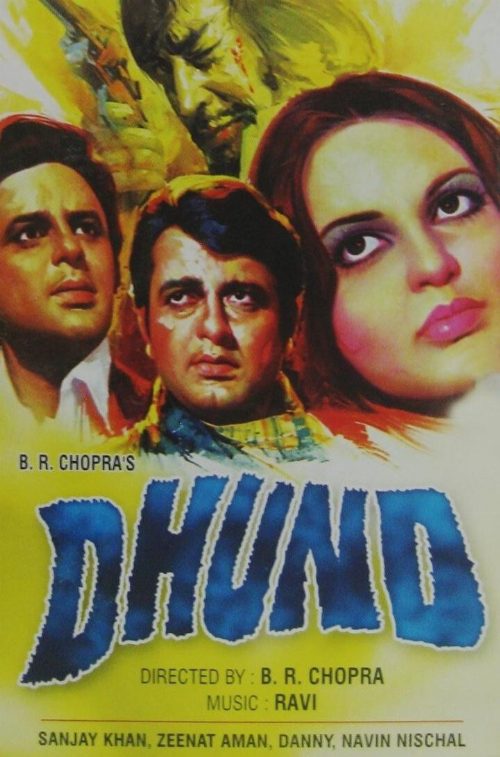
Dhund is the story of a young woman Rani Ranjit Singh (Zeenat Aman), whose invalid husband Thakur Ranjit Singh (Danny Denzongpa) is murdered. The finger of suspicion points at the young widow and her lover Suresh Saxena (Sanjay Khan), but the killer is someone else.
The fog-drenched landscapes of 1970s Bollywood cinema often served as perfect backdrops for psychological tension, and Dhund stands as a quintessential example of how the Hindi film industry mastered the atmospheric thriller long before modern genre tropes became standardized. Directed by the legendary B.R. Chopra, this mystery unfolds with a calculated precision that prioritizes character instability over mere jump scares. By placing a wealthy, bedridden patriarch at the center of a domestic tragedy, the film crafts a claustrophobic environment where every character seems to be hiding a motive behind polite social veneers. It is a stylish departure from the musical romances of the era, opting instead for a cold, calculated exploration of betrayal and legal maneuvering that keeps the audience questioning the integrity of every protagonist.
Zeenat Aman delivers a performance that anchors the narrative, portraying a woman caught in the tightening grip of an investigation that refuses to let her go. Her chemistry with Sanjay Khan adds a layer of illicit tension, yet the film cleverly subverts expectations by shifting the focus away from a traditional romantic arc toward a gritty procedural hunt for the truth. For viewers who appreciate the golden age of Indian suspense, the film functions as a masterclass in pacing, utilizing the isolation of a grand estate to heighten the stakes. The casting of Danny Denzongpa as the ill-fated husband further emphasizes the film’s commitment to nuanced acting, as he brings a haunting presence to a role defined by physical frailty and psychological dominance.
This production remains an essential watch for enthusiasts of vintage Indian noir who enjoy untangling complex webs of deceit. While many films of the seventies leaned heavily into melodrama, B.R. Chopra opted for a tighter, more cerebral approach that feels surprisingly contemporary in its structure. It is positioned as a must-see for those who prefer their mysteries served with a side of sophisticated social observation rather than purely bombastic action. By stripping away the typical song-and-dance expectations of the period, the film invites the spectator to play detective, carefully examining the motives of a small, interconnected group of people whose lives are permanently altered by one fateful night. It is a testament to the versatility of the Hindi film industry during a transformative decade, proving that a compelling script and a sharp director are all that is required to build lasting cinematic intrigue.