About Haathi Mere Saathi
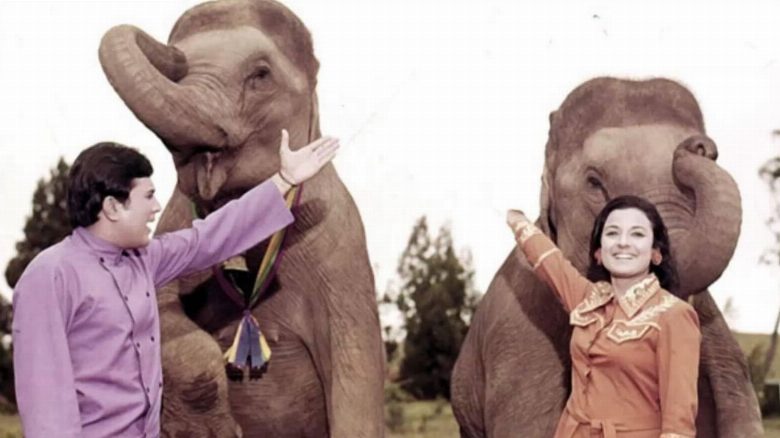
Raju becomes very attached to his four elephants after they save his life. His wife, however, fears for her child and tells him that he must choose between the animals and his family.
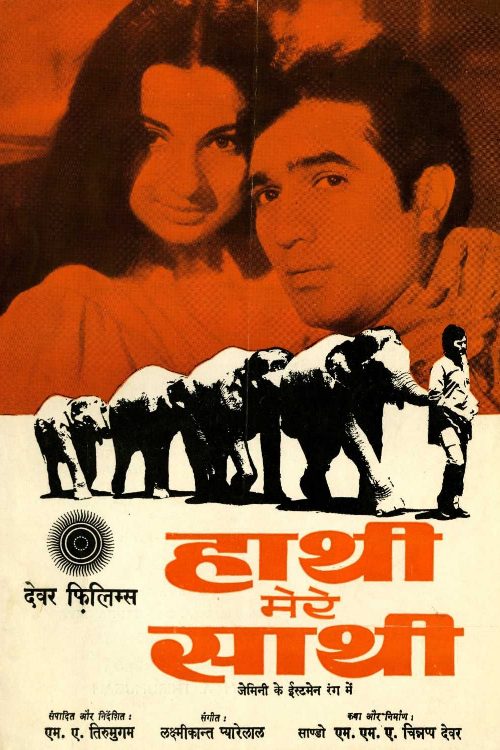
The bond between human beings and the animal kingdom has long served as a poignant mirror for our own societal complexities, yet few cinematic efforts have captured this connection with the unabashed emotional sincerity of Haathi Mere Saathi. Released in 1971, this landmark Hindi drama solidified its place in the golden era of Indian cinema by centering its narrative on the profound loyalty of elephants. At a time when the industry was heavily invested in grand romantic spectacles and high-stakes social dramas, this film carved out a unique niche by emphasizing interspecies companionship. The story follows a man whose life is inextricably linked to the gentle giants who rescued him, creating a domestic tension that forces him to navigate the precarious balance between his devotion to these creatures and his responsibilities toward his spouse and child.
Beyond its sentimental core, the film functions as a masterclass in the star power that defined the decade. Rajesh Khanna, arguably the most significant cultural phenomenon of 1970s Bollywood, brings a vulnerable intensity to the lead role that elevates what could have been a standard melodrama into something deeply resonant. His ability to anchor the screen alongside non-human performers is a testament to his versatility as a performer who could shift seamlessly from urban romantic roles to grounded, rustic narratives. The production remains a quintessential example of the period, reflecting a time when Indian filmmakers were increasingly looking toward themes of moral integrity and the sanctity of nature, often blending lighthearted musical elements with heavy-handed emotional stakes to reach a broad family audience.
Modern viewers who appreciate the tradition of emotional Indian storytelling will find this a fascinating case study in how the industry once utilized animals as pivotal characters rather than mere background elements. While the pacing and stylistic choices are firmly rooted in the early seventies, the central conflict remains a universal exploration of loyalty and the shifting priorities of adulthood. It is an essential watch for those interested in the evolution of the Hindi film industry, particularly for fans of the classic star-driven vehicles that shaped the tastes of generations. By successfully integrating the whimsy of animal antics with the gravity of family disputes, the film secured its legacy as a beloved classic that continues to hold cultural weight in the discourse of vintage Indian cinema.