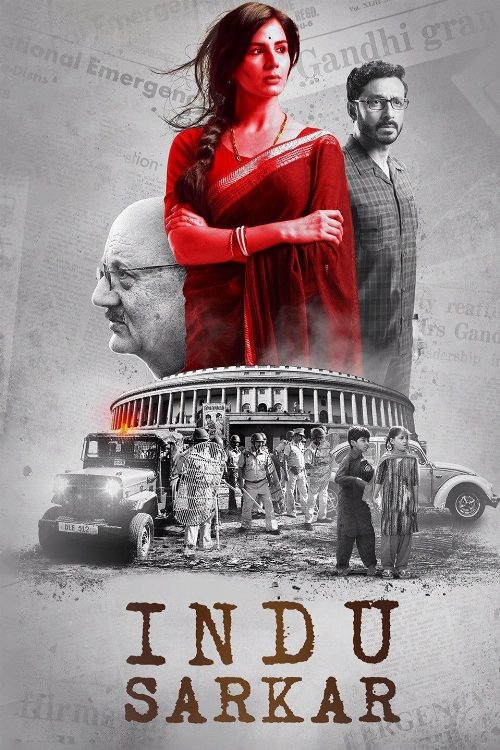
Indu Sarkar(2017)
About Indu Sarkar
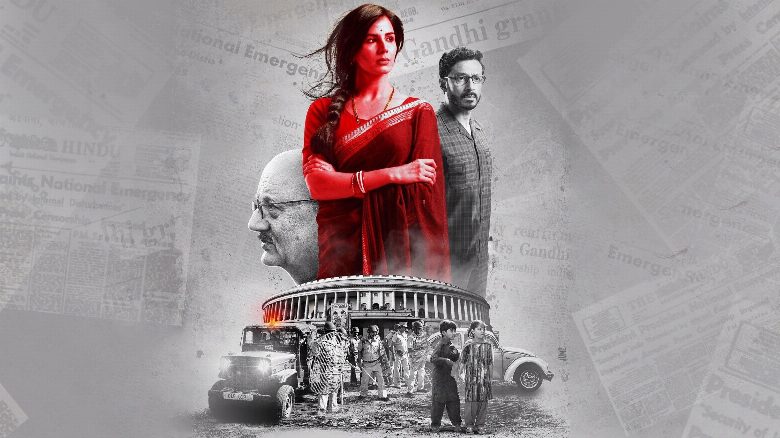
Indu’s husband, a government employee, believes in using the state of Emergency to advance his career, but a moral and ideological discrepancy sets her on a own path.
Madhu Bhandarkar has long been a filmmaker fascinated by the intersection of personal ambition and systemic upheaval, and in Indu Sarkar, he turns his lens toward one of the most contentious eras in modern Indian history. Set against the backdrop of the 1975 internal emergency, the narrative explores how a period of profound political suppression ripples through the domestic sphere. The film centers on a woman with a speech impediment who finds herself at odds with her husband, a man whose desperate climb up the bureaucratic ladder blinds him to the human cost of the policies he serves. By grounding a national crisis within the walls of a single household, the movie attempts to humanize the heavy weight of historical trauma rather than simply recounting the events found in textbooks.
The film is a bold entry in Hindi cinema, which has historically been cautious about dramatizing the Emergency. Kirti Kulhari delivers a nuanced performance that anchors the emotional stakes of the story, portraying a character who evolves from a passive observer into an unlikely voice of defiance. Her journey is juxtaposed against the cold, calculated pragmatism of her spouse, played by Tota Roy Chowdhury, and the authoritative presence of figures like Neil Nitin Mukesh and Anupam Kher. This clash of ideologies reflects a recurring theme in Bhandarkar’s filmography, where the individual is often pitted against a vast, indifferent machine. The aesthetic choices lean into the grit of the mid-seventies, capturing the suffocating atmosphere of a time when civil liberties were suspended and the lines between loyalty and morality became dangerously blurred.
Viewers who enjoy character-driven dramas that challenge the status quo will find much to unpack here. It is particularly well-suited for audiences interested in political thrillers that prioritize psychological depth over high-octane action. While the film navigates sensitive historical territory, its primary focus remains on the internal awakening of its protagonist, making it an intimate study of courage in the face of institutional pressure. For those who track the evolution of Hindi drama, this project stands as a notable attempt to blend historical fact with fictionalized domestic conflict. It invites spectators to consider how ordinary citizens navigate the moral dilemmas that arise when the state demands total compliance, offering a compelling look at a decade that remains a vital reference point in the ongoing discourse of Indian democracy.