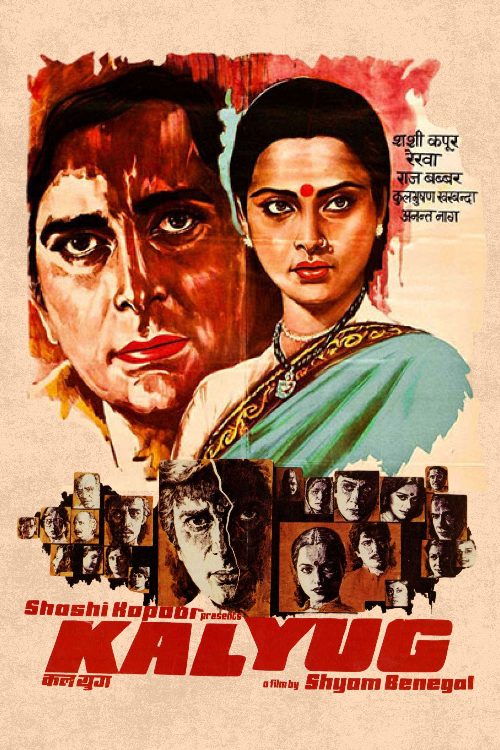
About Kalyug
A tale of intrigue and rivalry between two wealthy brothers as they conspire to create havoc in the other's life.
The legacy of Shyam Benegal as a visionary of Indian parallel cinema is perhaps best observed in his sharp, uncompromising look at industrial power struggles in the 1981 production Kalyug. Rather than relying on the melodramatic tropes common in the commercial Hindi cinema of that era, the film presents a cold, calculated examination of corporate warfare that feels remarkably ahead of its time. By reinterpreting the epic conflicts of the Mahabharata through the lens of modern textile moguls, the narrative moves away from traditional mythological storytelling to explore how greed and bloodlines dictate the fate of family-run empires. The tension is built not through action sequences, but through the claustrophobic atmosphere of boardrooms and the shifting loyalties of individuals caught between their personal ethics and the demands of a ruthless patriarch.
For audiences today, this film serves as a fascinating time capsule of a period when Indian filmmakers were increasingly interested in deconstructing the morality of the affluent class. It stands out within the broader landscape of Hindi cinema by favoring a grounded, naturalistic approach that highlights the internal rot of a family obsessed with maintaining its market dominance. The ensemble cast delivers performances that are restrained yet heavy with subtext, allowing the viewers to observe the slow disintegration of trust as brothers turn against one another in a quest for control. It is a dense, dialogue-heavy experience that demands patience, making it an essential watch for those who appreciate political dramas and character-driven narratives that eschew the spectacle of song and dance.
The film is particularly rewarding for cinephiles who enjoy seeing classic literary structures adapted into contemporary settings. Benegal uses the backdrop of the industrial age to critique the erosion of traditional values, effectively positioning the story as a mirror to the societal shifts occurring in urban India at the time. Whether you are a student of film history or simply a fan of intense family sagas that prioritize psychological depth over easy answers, this work provides a compelling look at human frailty. It remains a stark reminder of the director’s ability to turn a boardroom dispute into a profound moral inquiry, ensuring its place as a significant entry in the history of alternative Indian cinema. Its enduring relevance lies in the universal nature of its themes, which continue to resonate whenever the pursuit of wealth threatens to destroy the fundamental bonds of kinship.
Cast(30)