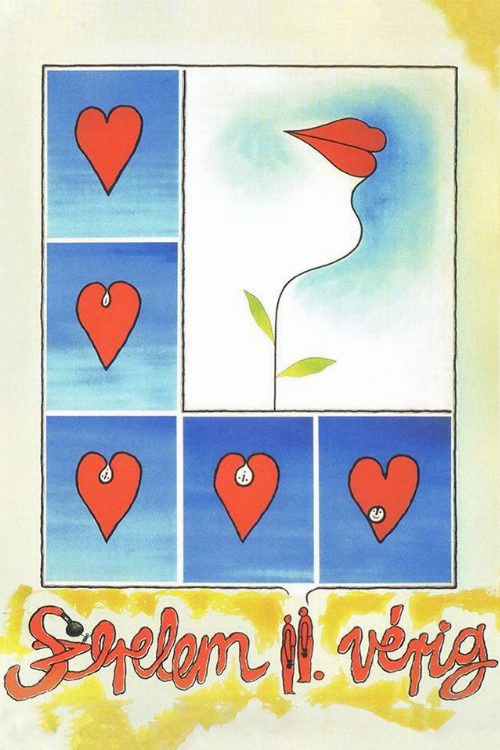
About Love Till Second Blood
The father of Füge goes to Africa to take a job and he leaves his old Mercedes with him to taxi with it. The band of Füge appears in the Tabán with moderate success.
In the vibrant landscape of 1980s Hungarian cinema, György Dobray's 1988 drama Love Till Second Blood emerges as a fascinating time capsule, capturing a particular youth subculture against the backdrop of changing economic realities. This film is not just a narrative; it's a window into the aspirations and struggles of young people navigating the cusp of a new era, far removed from the high-octane action or romantic sagas often seen in contemporary global cinema. Its distinctiveness lies in its grounded portrayal of everyday life, blending personal ambition with the gritty realism of a burgeoning independent spirit.
The premise revolves around Füge, a young man entrusted with his father's vintage Mercedes, a vehicle that becomes both a symbol of responsibility and a tool for his foray into the world of taxi driving. This seemingly simple setup underpins a deeper exploration of self-reliance and the pursuit of dreams, however modest. Füge's band, finding its voice in the Tabán district, represents a quest for creative expression amidst the daily grind. This dual pursuit — financial independence through an unconventional means and artistic fulfillment — offers a poignant look at the challenges faced by youth in a society undergoing subtle shifts. The film eschews grand gestures for an intimate look at how individuals carve out their own paths, using the taxi as a mobile stage for encounters and the band as an outlet for collective identity.
Viewers accustomed to the rich character dramas and socially conscious narratives from Indian cinema, particularly those from Malayalam or Bengali industries known for their realistic portrayals, might find a surprising resonance with Love Till Second Blood. It's a film for those who appreciate character-driven stories over plot-heavy thrillers, and who enjoy observing the nuances of human experience in a specific cultural context. Director György Dobray, known for his ability to tap into the zeitgeist of his time, appears to craft a narrative that, while rooted in 1980s Hungary, speaks to universal themes of ambition, friendship, and the search for purpose. The film, with its focus on the working-class aspirations and musical dreams, offers a reflective experience, inviting audiences to ponder the universal struggles of youth against a unique European backdrop.