About Pirat's Notes
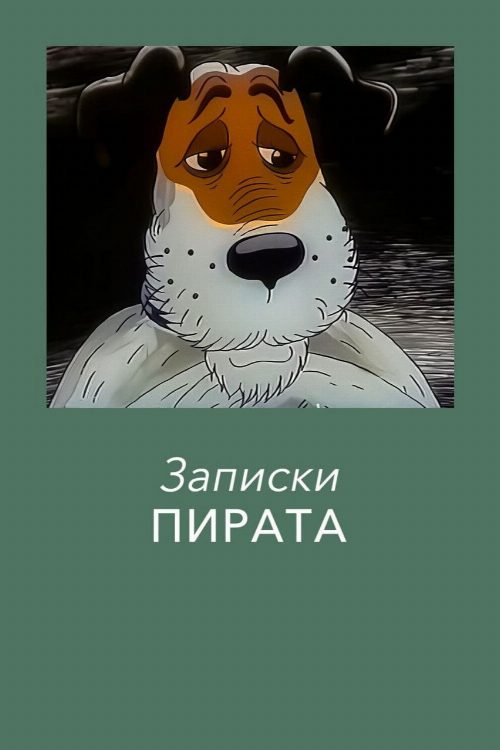
Pirat, a dog who can read and write, keeps a journal in which he records his observations of the world. Sent to the countryside with his young master, he discovers rural life, observes the animals, and reflects on their place in nature and his own. His encounter with another dog named Pirate, chained and reduced to a utilitarian role, leads him to question the meaning of freedom and existence. Through this naive yet philosophical perspective, the film offers a bittersweet reflection on identity, happiness, and the animal condition.
Few animated features from the late eighties manage to balance whimsical charm with existential inquiry as effectively as Pirat's Notes. Directed by Anatoliy Solin, this Soviet-era production centers on a literate canine protagonist whose diary entries provide a unique lens through which to view the complexities of the human and animal worlds. While many family films of the period relied on slapstick humor or straightforward moral fables, this piece chooses a more contemplative path. By positioning a dog as a budding intellectual, the narrative invites viewers to consider how intelligence and observation shape our understanding of the societies we inhabit, whether urban or rural.
The film distinguishes itself by contrasting the life of its protagonist with that of a tethered counterpart, a narrative device that highlights the stark divide between intellectual freedom and domestic servitude. For audiences familiar with the rich tradition of Eastern European animation, which often favored metaphorical storytelling over pure spectacle, this work stands as a poignant reminder of the medium's ability to tackle sophisticated themes. Much like the nuanced character studies found in contemporary independent cinema across the Indian film industries, where directors often use humble settings to explore deep-seated social hierarchies, Solin uses the simple backdrop of a countryside retreat to probe the nature of happiness and autonomy. It is a quiet, thoughtful experience that avoids heavy-handed sentimentality in favor of a bittersweet, honest look at the condition of those who live on the margins of human civilization.
Viewers who appreciate slow-burn narratives and artistic animation that prioritizes atmosphere over rapid-fire action will find much to admire here. The vocal performances, featuring talents like Rogvold Sukhoverko and Viktor Proskurin, ground the stylized visuals in a palpable sense of sincerity. Because the story focuses on the internal monologue of a dog, it speaks to anyone who has ever wondered about the hidden lives of their own companions. This production remains a noteworthy entry for those exploring the history of global animation, offering a rare glimpse into a mindset that treats its young audience with profound respect. It is an ideal recommendation for fans of philosophical fables who enjoy stories that linger in the mind long after the final frame, prompting reflection on the roles we play and the chains, both physical and metaphorical, that define our existence.
Cast(4)



Crew
Sound
Script Editor
Director
Editor
Producer
Music
Art Direction
Director of Photography
Similar Films