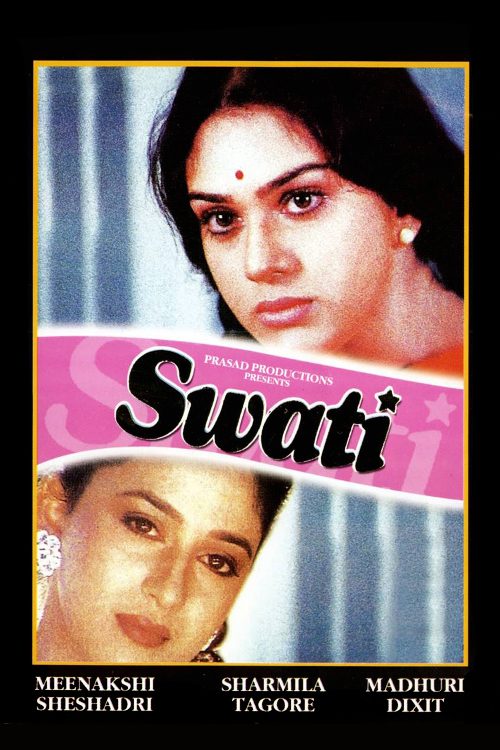
About Swati
Sharda, a nurse and single mother, raises her daughter Swati as an independent, articulate young woman. Swati is a strong advocate of women's rights in a society where there is significant male domination. Swati deals with eve teasers firmly, sometimes with considerable force. When a married friend of hers gets raped in the presence of her husband, she acts as a counsellor and helps them adjust to the reality of a society that blames the victim and not the rapists. Swati takes on a huge transformation when she meets a political activist and falls in love with him. She embarks on a project of matchmaking for her mother and engineers a wedding with a widower who has a grown-up daughter.
Stepping into the landscape of mid-eighties Hindi cinema, Swati emerges as a compelling character study that boldly navigates the complexities of gender dynamics and societal expectations. At its heart, the film centers on a fierce young woman who refuses to be silenced by the patriarchal norms surrounding her, opting instead to confront harassment head-on with a grit that was rarely seen in the mainstream narratives of that era. By juxtaposing her uncompromising stance on women’s rights with the deeply emotional journey of her mother, the film manages to balance social commentary with the intimate warmth of a family drama. This specific focus on the mother-daughter bond, portrayed through a lens of mutual respect and unconventional sacrifice, offers a refreshing departure from the typical melodramatic tropes of the time.
The film is particularly notable for its casting choices, bringing together a mix of seasoned performers and rising talent to explore themes of empowerment and domestic reconciliation. Madhuri Dixit, in an early stage of her illustrious career, embodies the titular character with a natural intensity that anchors the entire production. Opposite her, the inclusion of veterans like Shashi Kapoor provides a grounding influence, lending gravity to the story as it shifts from a critique of public injustice to the private, delicate task of finding happiness for a parent. The direction by Kranthi Kumar focuses on the internal evolution of these characters, ensuring that the political activism within the script serves as a catalyst for personal growth rather than just a backdrop for conflict.
Audiences who appreciate vintage Indian dramas that prioritize character development over mere spectacle will find much to admire here. It is an ideal pick for viewers interested in the history of feminist discourse within Bollywood, as it tackles sensitive subjects like victim-blaming and marital trauma with a sincerity that remains relevant even decades later. By placing the agency firmly in the hands of its female protagonists, the film functions as both a time capsule of the social anxieties of the 1980s and a testament to the enduring power of familial love. Anyone seeking a narrative that blends righteous anger with a hopeful, life-affirming conclusion will find this feature a worthy addition to their watchlist, proving that the struggle for dignity is a timeless cinematic pursuit.
Cast(11)