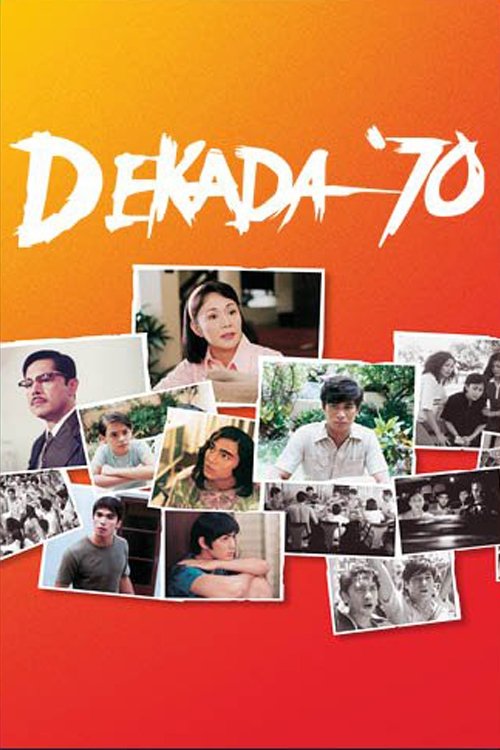
About The 70s
Amanda and Julian are doing their best to rear their five sons during the repressive dictatorship of Ferdinand Marcos. Though the parents view themselves as apolitical, most of their sons bristle at life under martial law and turn to various forms of activism -- or to simple teenage rebellion -- for release. After the family becomes the victim of extremist violence, Amanda begins to find her own dissident voice.
Stepping back into the cinematic archives of the early millennium, The 70s offers a poignant look at the personal toll of political turbulence within the Philippines. While global audiences often associate the era of martial law with grand historical epics or gritty documentaries, this drama chooses a domestic lens, focusing on how a single household navigates the erosion of civil liberties. It stands as a notable example of how regional storytelling can transform broad national trauma into a relatable narrative about the evolving consciousness of a mother. By centering the story on Amanda and Julian, the film captures the agonizing transition from a family that wishes to remain invisible to one that is forced to confront the harsh reality of their surroundings.
The strength of this production lies in its character-driven approach rather than reliance on political jargon. For viewers who appreciate the complex emotional landscapes found in contemporary Indian dramas—where family dynamics often clash with societal shifts—this film will resonate deeply. It echoes the themes of personal awakening and ideological friction that define many celebrated works in Malayalam or Tamil cinema, where the protagonist often undergoes a subtle yet profound transformation. Director Chito S. Roño expertly balances the innocence of teenage rebellion with the looming shadow of institutional oppression, ensuring that the stakes feel intimate even when the backdrop is historical. It is a work for those who prefer their historical dramas to be rooted in the kitchen, the living room, and the quiet spaces of private grief.
For fans of world cinema, this piece serves as a compelling study of how a parent finds their voice when the safety of their children is compromised. The performances, particularly those portraying the sons as they drift toward different paths of resistance, provide a multifaceted look at how a generation copes with authoritarian rule. While the narrative is firmly planted in a specific era of Filipino history, the existential questions it poses about complicity and courage remain universally relevant. It is a film that rewards viewers who are patient enough to let the tension build, ultimately proving that the most powerful form of protest often begins with a mother who refuses to stay silent. By moving beyond mere tragedy, it highlights the resilience of the human spirit in the face of systemic erasure, making it a worthy addition to any watchlist focused on the intersection of family life and political change.
Cast(30)