The Extraordinary Adventures of Diego Diegovich in The Country of The Bolsheviks(2007)
About The Extraordinary Adventures of Diego Diegovich in The Country of The Bolsheviks
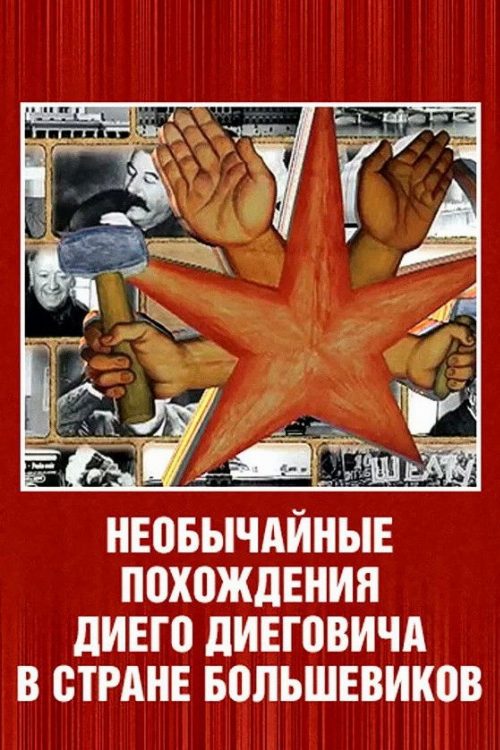
The fate of Diego Rivera, a Mexican muralist who glorified the Mexican Revolution with his art, is connected with Russia in many ways. Russian artists Angelina Belova and Maria Vorobyova-Stebelskaya bore him children, for a long time he was friends with Trotsky, joined the Communist Party several times, was friends with Eisenstein, Mayakovsky, Ehrenburg. Finally, it was to Soviet Russia that he came in the last years of his life in the hope of being cured of cancer. This film is about Diego Rivera and how, 50 years later, his legacy is seen.
Few cinematic portraits manage to bridge the gap between the vibrant colors of Mexican muralism and the stern, ideological landscapes of early twentieth century Russia quite like Nataliya Nazarova’s 2007 documentary. By focusing on the life of Diego Rivera, the project sidesteps the standard biographical format, choosing instead to map the intricate web of personal and political connections that tethered the artist to the Soviet Union. The film serves as a historical mosaic, tracing his relationships with key cultural figures and his intermittent attempts to align himself with the global communist project. It stands out by examining how these international affiliations shaped not just the man, but the very nature of his artistic output during a period of immense global turbulence.
For audiences accustomed to the high-stakes dramas of contemporary Indian cinema, where historical epics often focus on grand nationalist narratives, this Russian-produced documentary offers a refreshing change of pace. It functions as an intellectual investigative piece, perfect for viewers who appreciate the intersection of world history and art. Aleksandr Filippenko provides a compelling anchor for the narrative, guiding the audience through the complexities of Rivera’s identity as both a revolutionary icon and a man seeking personal solace in his final years. The film is especially relevant for those interested in the cross-pollination of ideologies, as it highlights how an artist from the Americas became deeply enmeshed in the artistic and political circles of Moscow, Leningrad, and beyond.
The documentary succeeds because it refuses to present a sanitized version of history, acknowledging the contradictions inherent in Rivera’s life. It captures the tension between his commitment to radical politics and his deeply human struggles, including his search for medical treatment in the Soviet state as his health declined. While current global cinema often prioritizes fast-paced storytelling, Nazarova invites the viewer to slow down and reflect on the enduring weight of historical legacies. By revisiting these events decades later, the film asks whether our understanding of such massive figures changes as the geopolitical context shifts. It is an essential watch for anyone who enjoys cinematic explorations of global interconnectedness and the ways in which art can transcend borders, even when those borders are defined by the iron curtains of the past.