
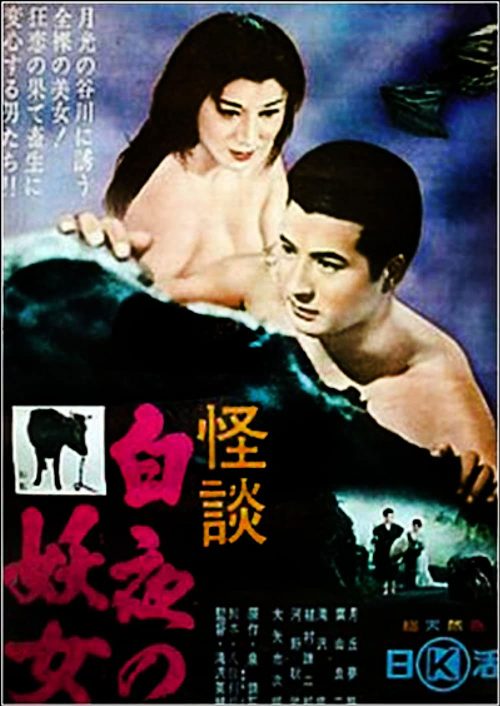
About The Temptress and the Monk
A Buddhist monk becomes ensnared by a seductive woman who, according to legend, transforms her lovers into beasts.
The Temptress and the Monk serves as a haunting relic of mid-century Japanese cinema, capturing a period where folklore and psychological dread frequently collided on the silver screen. Directed by Eisuke Takizawa, this 1957 production leans into the atmospheric tension that defined the era, offering a stark contrast to the sprawling historical epics that dominated the domestic market at the time. While contemporary Indian audiences might be more accustomed to the high-octane supernatural thrillers or mythological retellings found in current Telugu or Kannada cinema, this film occupies a more intimate, claustrophobic space. It functions less as a grand spectacle and more as a cautionary fable, stripping away the comfort of modernity to explore the primal collision between spiritual discipline and earthly desire.
At the heart of the narrative is the tension between a man of the cloth and a figure who embodies the forbidden. The premise centers on a monk whose rigid life of celibacy is upended by an enigmatic woman whose reputation precedes her in whispers of metamorphosis and tragic ends. For viewers who appreciate the slow-burn suspense of classic world cinema, the film offers a masterclass in how to build terror through suggestion rather than overt visual effects. It is a work that demands patience, rewarding those who enjoy examining how cultural values regarding morality and temptation were navigated through the lens of horror during the late fifties. The performances by Ikuko Kimuro and Tadashi Kobayashi anchor the story, grounding its more fantastical elements in a palpable sense of human vulnerability.
This film is particularly relevant for cinephiles interested in the evolution of the horror genre across Asia. Much like the way Malayalam cinema has recently mastered the art of blending domestic drama with unsettling supernatural undertones, Takizawa utilizes the limitations of his period to create an enduring sense of unease. The film does not merely rely on the trope of a monstrous transformation but instead interrogates the internal decay of a character who allows his resolve to shatter. It stands as a testament to the versatility of Japanese storytelling, proving that even decades later, the archetypal battle between piety and passion remains a potent engine for storytelling. Those seeking a departure from contemporary blockbusters will find this piece a fascinating study in shadow, restraint, and the timeless fear of losing one’s soul to the unknown.
Cast(12)