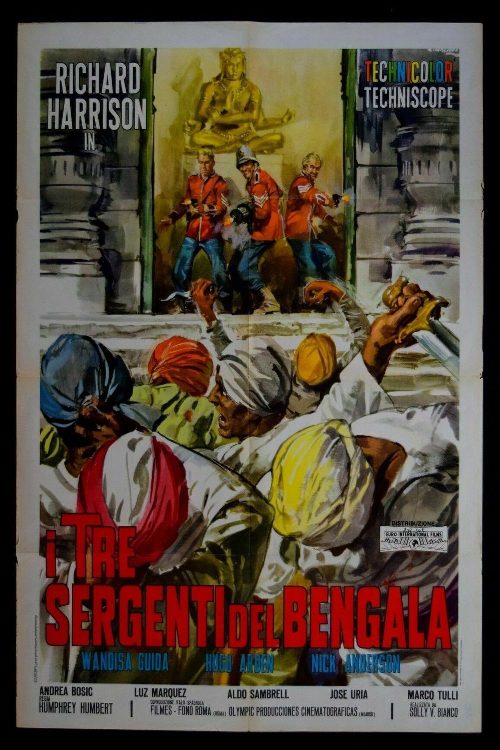
About Three Sergeants of Bengal
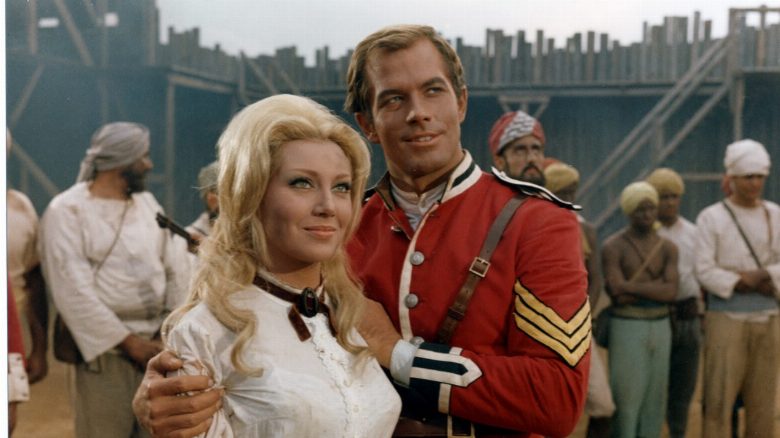
This action-packed adventure/jungle film starts out when three British soldiers stationed in Malaysia are sent to Fort Madras to help the commandant fight off an elusive bandit who is terrorizing the countryside.
Venturing deep into the sweltering landscapes of 1960s international cinema, Three Sergeants of Bengal stands as a fascinating curiosity that bridges the gap between European genre filmmaking and the exoticized allure of the colonial era. Directed by the prolific Umberto Lenzi, this production captures a specific moment in time when Italian studios were aggressively exporting their signature style of adventure sagas to global markets. By placing its narrative focus on a trio of British military men tasked with quelling an insurgent threat near a regional outpost, the film taps into the classic tropes of imperial period dramas while maintaining the heightened pacing and stylized conflict that defined Lenzi early career before he became synonymous with the giallo movement.
For audiences accustomed to the rich history of Indian regional cinema, this film offers a unique stylistic contrast. While the backdrop of Fort Madras draws upon the historical legacy of the Indian subcontinent, the film is fundamentally an exercise in continental genre manufacturing. It is less concerned with historical accuracy and more interested in the kinetic energy of jungle skirmishes, rugged camaraderie, and the cat and mouse game between established military forces and a shadowy, elusive antagonist. Viewers who appreciate the golden age of adventure cinema will find its aesthetic approach reminiscent of the pulpy, high-stakes narratives that were popular across Asia and Europe during the mid-sixties. It functions as a time capsule, showcasing how foreign filmmakers visualized the topography of the East through a lens of stylized drama and tension.
This film is ideally suited for cinephiles who enjoy dissecting how global industries interpreted colonial settings during the post-war period. The cast, featuring stalwarts like Ugo Sasso and Andrea Bosic, delivers the kind of stoic, archetypal performances that anchored these mid-century adventures. By prioritizing atmosphere and momentum, the director crafts a viewing experience that emphasizes the physical challenges of the terrain as much as the tactical battles. Those interested in the evolution of action tropes will find the film a compelling study of early pacing techniques that influenced later, more bombastic entries in the war and adventure genres. While it remains a niche entry in the director's massive filmography, it serves as a vivid reminder of the era when international co-productions sought to turn historical intrigue into pure, unadulterated entertainment. It is a brisk, straightforward journey into a stylized past that continues to hold interest for students of international genre evolution.
Cast(7)







Crew
Editor
Director
Screenplay
Director of Photography
Original Music Composer
Set Decoration
Similar Films