
About Me Too
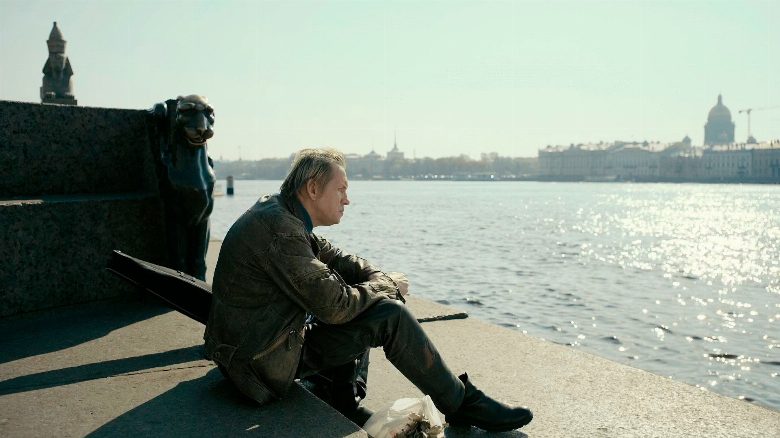
Five passengers - the Bandit, his friend Matvei, Matvei's old father, the Musician, and a young woman - race along an empty road in a big black jeep, searching for the Belfry of Happiness which, according to hearsay, lies somewhere between St. Petersburg and the town of Uglich, near a deserted nuclear power station. The Belfry takes people, but it does not take everyone. Each of the five passengers believes that he or she will be chosen.
A bleak, existential road trip unfolds across the desolate landscapes of rural Russia in Me Too, a film that captures the specific, haunting melancholy of director Aleksey Balabanov. Rather than relying on traditional dramatic structures, the narrative follows a disparate group of individuals crammed into a luxury vehicle, all united by a desperate, superstitious pilgrimage to a mythical site of salvation. It is a stark departure from the polished, high-octane thrillers often dominating global cinema, choosing instead to lean into a slow-burn philosophical inquiry about human worth and the nature of hope in a decaying world. The film is defined by its austere aesthetic, where the vast, unforgiving environment acts as a mirror to the inner voids of the characters, reflecting a uniquely Russian brand of fatalism that feels both intimate and grandly tragic.
This project serves as a compelling study for viewers interested in world cinema that prioritizes atmosphere over exposition. While audiences accustomed to the vibrant, high-energy storytelling found in current Telugu or Hindi blockbusters might find the pacing deliberate, there is a profound resonance in its minimalism that transcends borders. Balabanov, an auteur known for his unflinching gaze at societal fractures, utilizes this journey to explore the intersection of myth, spirituality, and the harsh realities of post-Soviet life. The characters represent a cross-section of humanity, each clinging to their own distorted version of a miracle, making the film a fascinating psychological portrait rather than a standard road movie. It does not offer easy answers about why some are selected and others are abandoned, leaving the audience to grapple with the same uncertainty that plagues the protagonists.
For fans of international independent films, Me Too remains a quintessential example of how a limited premise can be elevated through strong directorial vision. It is less about the destination and entirely about the crumbling psyche of those who believe that a higher calling might finally justify their existence. Those who appreciate cinema that lingers in the mind long after the credits roll will find much to dissect here. By stripping away the artifice of genre conventions, the film forces a direct confrontation with the characters' insecurities and their ultimate yearning for transcendence. It is a somber, thought-provoking piece that solidifies Balabanov’s reputation as a filmmaker who was never afraid to confront the darkness inherent in the human condition, making it a must-watch for those who seek depth and artistic integrity in their viewing habits.
Cast(13)