About Swallow
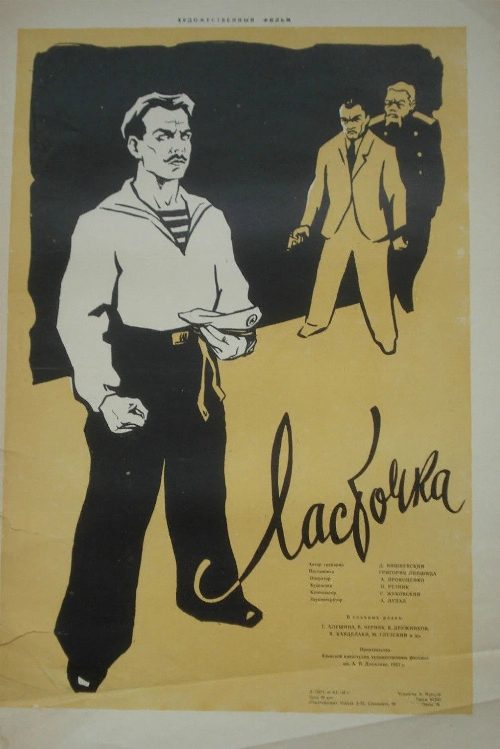
The historical and revolutionary film tells about how during the civil war in Sevastopol the Bolshevik Alekseev and the investigator of the Tsarist Okhrana Yarnovsky met. The plot of the picture is based on the story of their meetings in the past.
The cinematic landscape of the late fifties remains a fascinating window into how historical narratives were reconstructed for the screen, and Swallow stands as a quintessential artifact of this era of Soviet drama. Set against the turbulent backdrop of the Russian Civil War, the narrative pivots on the volatile intersection of two opposing ideologies embodied by a Bolshevik activist and a tsarist detective. While many films of this period leaned heavily into grand, sweeping depictions of conflict, this picture opts for a more intimate, psychological study of friction. By centering the story on the memory of encounters between Alekseev and Yarnovsky, the director Grigoriy Lipshits crafts a tense game of cat and mouse that transcends mere battlefield action, choosing instead to focus on the intellectual and moral struggle inherent in a nation tearing itself apart from within.
For modern viewers interested in global cinema history, Swallow offers a compelling look at the stylistic conventions of its time. The film is positioned as a character-driven piece, prioritizing the ideological collision between its leads over the typical spectacle of war movies. It is particularly noteworthy for how it navigates the complex political climate of its production, utilizing the Sevastopol setting to evoke a sense of entrapment and high stakes. Fans of historical dramas who appreciate slow-burn narratives and period-specific performances will find much to admire in the work of an ensemble cast that includes veterans like Vsevolod Sanayev and Vladimir Druzhnikov. These actors bring a gravitas to the screen that anchors the shifting timeline, ensuring that the tension remains palpable even as the plot jumps between past recollections and the immediate pressures of the revolution.
While contemporary audiences are accustomed to high-octane historical epics, this film serves as a reminder of the power of dialogue and thematic depth in mid-century storytelling. It acts as a bridge between the heroic archetypes often seen in revolutionary cinema and the emerging interest in complex, flawed protagonists who reflect the human cost of political upheaval. Those who enjoy dissecting the evolution of political dramas or who have a penchant for films that emphasize the personal stakes of macro-historical events will find this project a worthwhile exploration. By moving away from the conventional war film structure, it manages to maintain a distinct identity that invites viewers to contemplate the nature of loyalty and the shifting tides of power in a way that feels surprisingly relevant even decades after its original release.