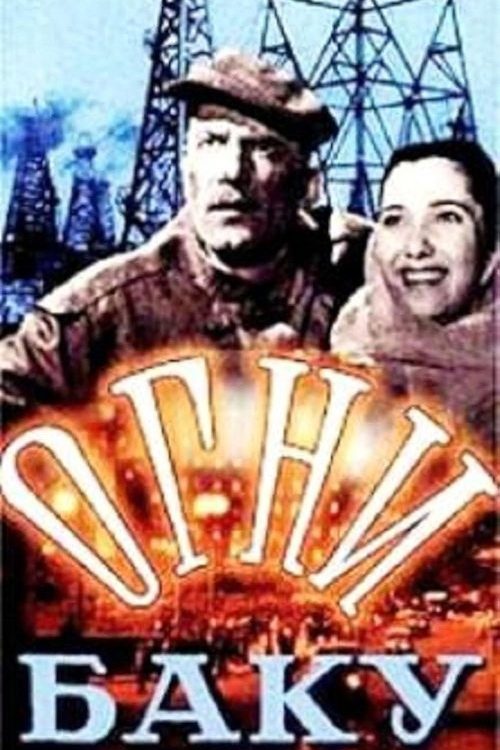
About The Fires of Baku
Dedicated to the development of the oil industry of Soviet Azerbaijan in the background of the first half of the twentieth century, including their selfless work in strengthening the economic and military might of the USSR.
The cinematic landscape of the late fifties remains a fascinating window into the industrial ambitions of the Soviet era, and The Fires of Baku stands as a compelling relic of that period. Directed by Iosif Kheifits, a filmmaker known for his keen eye on human struggles within grand historical frameworks, this drama shifts the lens toward the rugged terrain of Azerbaijan. Rather than focusing solely on the mechanical extraction of resources, the narrative highlights the profound human endurance required to transform the landscape into a bedrock of energy production. It is a film that captures the grit and sweat of the early twentieth-century workforce, framing their labor not just as a job, but as a defining pillar of a changing geopolitical reality.
For students of world cinema, this film serves as a vital bridge between regional storytelling and the overarching Soviet industrial aesthetic. It belongs to a tradition of period pieces that romanticize the collective spirit, yet it finds its strength in the individual performances of actors like Nikolai Mordvinov. The film manages to balance the technical aspects of oil exploration with the intimate lives of those who spent their years toiling in the fields. While many contemporary viewers might be accustomed to modern fast-paced dramas, this work offers a deliberate, atmospheric look at a region that has long been defined by its natural wealth and the people who fought to harness it. It is an essential watch for those who appreciate historical epics that lean heavily into the intersection of personal sacrifice and national progress.
The Fires of Baku remains particularly relevant for anyone interested in the cinematic history of the Caucasus and how the Soviet film industry documented its own expansion. Kheifits brings a level of gravitas to the screen that feels distinctly grounded in the era’s penchant for monumental storytelling. By focusing on the transformation of the region, the production functions as both a historical document and a character study of a workforce caught in the gears of history. Viewers who enjoy films that provide a deep dive into the origins of global industries or those who find interest in the stylistic evolution of mid-century Russian drama will find much to dissect here. It is an exploration of ambition, endurance, and the relentless pursuit of development that defined a generation, making it a noteworthy entry in the archive of twentieth-century world cinema.
Cast(25)