About Triumph of the Will
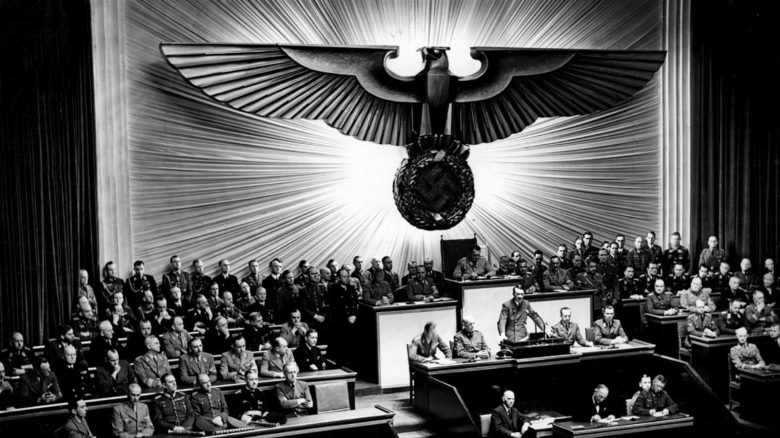
A showcase of German chancellor and Nazi Party leader Adolf Hitler at the 1934 Nuremberg Rally.
Few pieces of cinema history possess the chilling weight of Leni Riefenstahl’s 1935 documentary, a film that functions less as a record of an event and more as a masterclass in the dangerous intersection of aesthetics and authoritarianism. While modern audiences raised on the fast-paced, visceral storytelling of contemporary Indian cinema might find the pacing deliberate and the tone austere, the film remains an essential study for anyone interested in the mechanics of political myth-making. It documents the 1934 Nuremberg Rally with a level of technical precision that was decades ahead of its time, utilizing sweeping aerial shots and innovative camera angles that would eventually become the visual language of modern event filmmaking. By capturing the sheer scale of the Nazi Party gathering, the production sought to project an image of absolute unity and unwavering strength, turning a political rally into a highly stylized, cinematic spectacle.
Watching this film today requires a careful lens, as it occupies a complex space in global film history. It is frequently analyzed in film studies curricula not for its subject matter, but for its pioneering influence on visual propaganda. For fans of world cinema who appreciate the evolution of technical craft, the film serves as a sobering reminder of how easily artistic talent can be weaponized to serve ideological agendas. Its legacy is inextricably linked to the horrors that followed, making it a difficult but necessary watch for those studying how mass media can be used to manipulate public perception. It stands as a stark contrast to the emotionally charged, human-centric narratives currently thriving in industries like Tollywood or Bollywood, where the focus usually leans toward individual triumph rather than the total erasure of the self into a state apparatus.
Ultimately, this production is recommended primarily for history buffs, students of political science, and dedicated cinephiles who want to understand the origins of modern visual rhetoric. It is not an entertainment piece in the traditional sense, but rather a chilling artifact of a darker century. By stripping away the context of the era, one can see the raw technical ambition that directors have studied for generations, even while the content itself remains deeply repulsive. It serves as a permanent, cautionary example of the director’s singular focus on elevating a leader into a deity through the lens, a practice that has since been scrutinized and deconstructed by thinkers across every corner of the global film landscape.
Cast(15)












Crew
Screenplay
Special Effects
Director of Photography
Director
Sound Designer
Music
Similar Films