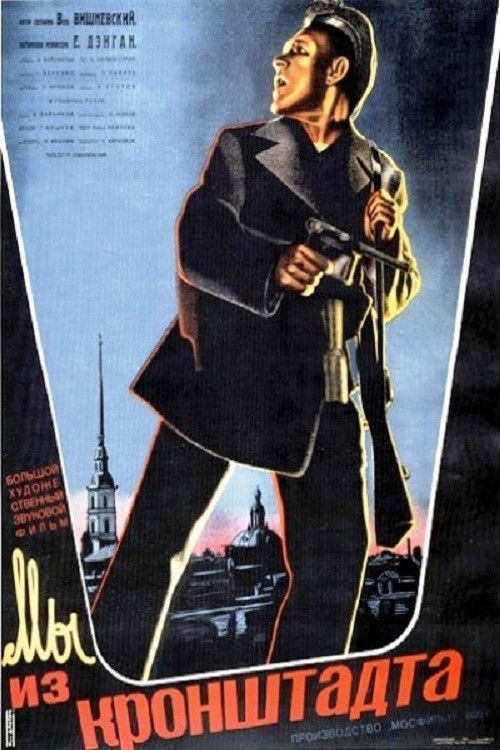
About We Are from Kronstadt
In 1919, during the post-revolution Russian Civil War, a naval detachment (made up of communist Reds) defends the strategic city of Petrograd from the White Russian counterrevolutionary forces
Few cinematic relics capture the raw, ideological intensity of the early Soviet era quite like the 1936 masterpiece We Are from Kronstadt. Directed by Efim Dzigan, this historical drama stands as a foundational pillar of socialist realism, portraying the naval infantry units tasked with holding the line against counterrevolutionary surges. While contemporary audiences are accustomed to high-octane modern war epics, this film offers a fascinating look at how history was mythologized during the mid-thirties. It functions less as a standard documentary account and more as a powerful piece of state-sanctioned storytelling that emphasizes collective sacrifice over individual heroics, a stylistic choice that resonates with the bold, sweeping narratives often found in the historical epics of Indian regional industries like the Telugu or Tamil film sectors.
The film distinguishes itself through its stark visual language and a relentless pace that mirrors the volatility of the Russian Civil War. For viewers interested in the evolution of global war cinema, the production provides a masterclass in staging large-scale combat sequences with the limited technical constraints of the period. The ensemble cast, featuring performances by Vadym Husiev and Oleg Zhakov, anchors the narrative in a palpable sense of urgency. Their portrayals reflect the archetypal soldier figures common to revolutionary cinema, prioritizing unwavering loyalty to the cause. It is this specific brand of high-stakes political drama that bridges the gap between classic world cinema and the thematic fervor seen in contemporary Indian historical blockbusters, where the struggle for territory and ideology often dictates the heartbeat of the plot.
Those who enjoy films that serve as windows into pivotal political turning points will find this work essential viewing. It is not merely a record of a defense strategy; it is a meticulously crafted artifact of an era that relied on cinema as a primary medium for national identity building. Because the story focuses on the defense of Petrograd against overwhelming odds, it taps into the universal human fascination with the underdog narrative. Whether one is a seasoned film buff studying the transition of Soviet aesthetics or a casual fan of historical dramas, this feature remains a compelling study in how directors like Dzigan utilized the camera to immortalize ideological struggles. By stripping away the modern gloss of digital effects, the film invites the audience to engage with the sheer gravity of its historical context, ensuring its place as a significant reference point for students of international film history.
Cast(11)