
About Perfect Days
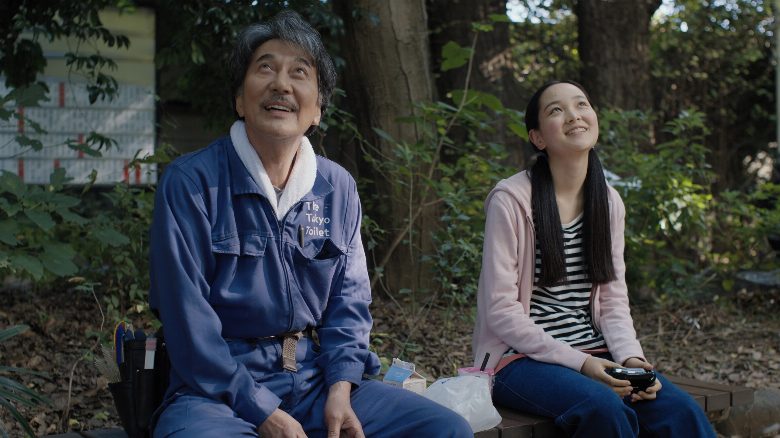
Hirayama is content with his life as a toilet cleaner in Tokyo. Outside of his structured routine, he cherishes music on cassette tapes, books, and taking photos of trees. Through unexpected encounters, he reflects on finding beauty in the world.
The rhythm of Tokyo finds its most gentle pulse in the quietude of Perfect Days, a film that elevates the mundane to the level of spiritual practice. While much of contemporary global cinema is fixated on high-stakes drama or sprawling spectacles, this piece chooses to linger in the corners of a laborer’s life, finding profound meaning in the repetitive motion of cleaning and the silent observation of urban nature. By centering on a man whose existence is defined by his commitment to his craft and his appreciation for analog artifacts, the film offers a meditative counterpoint to the frenetic pace often associated with modern Japanese life. It stands as a refreshing palate cleanser for audiences who have grown weary of the relentless noise of blockbuster entertainment.
For those who follow the trajectory of international arthouse cinema, this feature serves as a masterful study in minimalism. It occupies a space similar to recent explorations of solitary existence that have resonated deeply with Indian cinephiles who appreciate the slow-burn narratives of masters like Satyajit Ray or the observational grace seen in contemporary Malayalam indie cinema. The lead performance is anchored by a quiet, internal intensity that demands the viewer pay attention to the slightest shifts in facial expression and body language. Rather than relying on heavy dialogue to convey emotion, the storytelling prioritizes sensory details, such as the crackle of a vintage cassette tape or the way light filters through the leaves of a park tree, inviting the audience to inhabit the protagonist’s headspace.
This film is particularly well-suited for viewers who seek a cinematic experience that functions more like a poem than a puzzle. It is not designed for those looking for rapid plot development or sudden twists, but rather for the spectator who finds beauty in the architecture of everyday rituals. The director’s approach is one of immense empathy, stripping away the judgment often projected onto service-industry workers and instead highlighting the dignity inherent in a life lived with intentionality. By the time the credits roll, the film has effectively reframed the concept of satisfaction, suggesting that a life of simplicity is not merely an absence of ambition, but a curated collection of small, perfect moments. It is an essential watch for anyone interested in how the medium of film can capture the subtle textures of human contentment in an increasingly complex world.
Cast(41)