
About Be-Bop High School
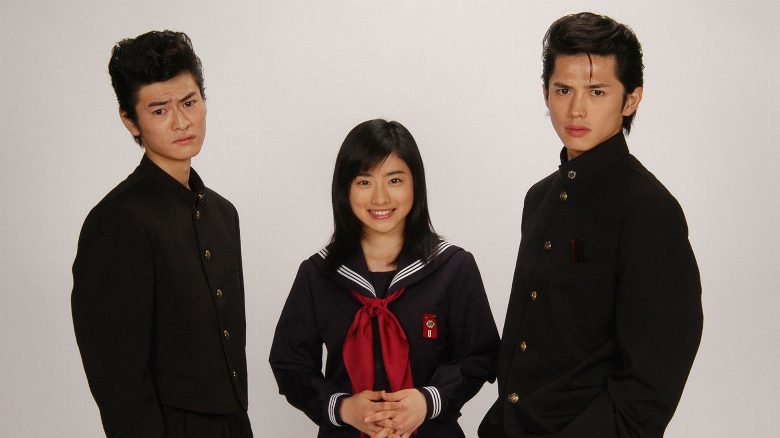
At Aitoku High School, repeat sophomores Kōji Katō and Tōru Nakama are bruiser fighters who scorn any flashy titles. They pursue honor student Kyōko Izumi alongside their loyal crew. When rival gang leader Teru’s “bontan-gari” attacks sweep through the district, even Aitoku’s toughest, including Kintarō and Junpei, fall prey, until Kōji and Tōru themselves are targeted and Kyōko is kidnapped by Teru…
The year 2004 saw the release of Be-Bop High School, a Japanese comedy-drama that plunges viewers into the chaotic world of Aitoku High. This film isn't your typical high school romp; it delves into the raw, often humorous, dynamics of adolescent rivalries and the pursuit of honor, albeit through a decidedly rough-and-tumble lens. At its core are Kōji Katō and Tōru Nakama, two sophomores who seem perpetually stuck in their academic year, preferring fists to diplomas and disdain for any semblance of pretension. Their lives, while seemingly simple, become entangled in a complex web of schoolyard politics and escalating conflicts, particularly as their attention turns towards the academically inclined Kyōko Izumi.
What sets Be-Bop High School apart is its unflinching portrayal of a specific subculture within Japanese youth. The narrative quickly escalates from schoolyard squabbles to more serious territorial disputes orchestrated by rival gang leader Teru. The film captures a grittier side of high school life, where reputations are built on strength and loyalty, and even the most formidable students find themselves outmatched. The introduction of "bontan-gari" attacks, a term that hints at a particular brand of intimidation, signals a shift in the stakes, pushing Kōji and Tōru from mere participants to central figures in a conflict that threatens to engulf their entire school and even ensnare Kyōko.
Viewers who appreciate a blend of raucous comedy and dramatic tension, set against a backdrop of unapologetic teenage bravado, will likely find Be-Bop High School engaging. It’s a film that doesn't shy away from depicting the rougher edges of youthful ambition and the often-unpredictable consequences of escalating rivalries. While director Fuminori Kaneko may not be a household name globally, his work here suggests a knack for capturing specific cultural nuances and delivering narratives that resonate with themes of loyalty, defiance, and the often-comical struggle for dominance in the formative years of life. The ensemble cast, including Kenichi Matsuyama, adds to the film's authentic feel, bringing to life a world that is both familiar in its adolescent angst and distinctly unique in its execution.