About Blonde
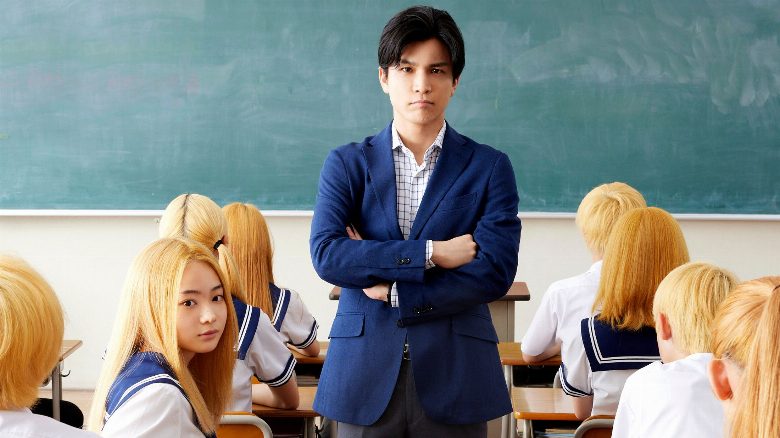
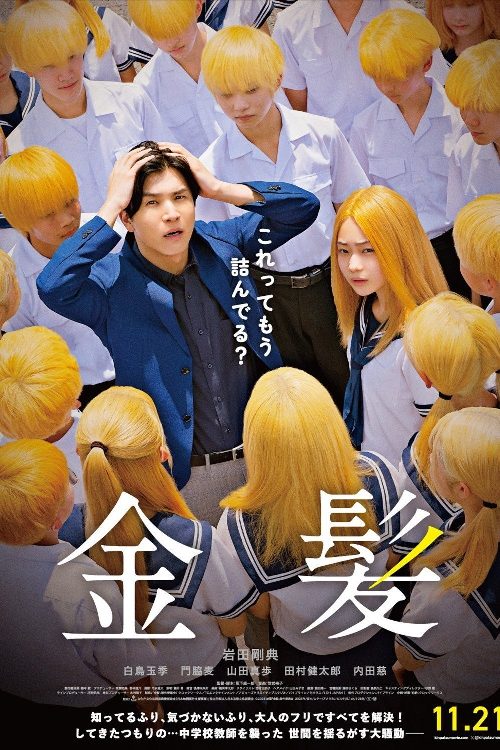
A middle school teacher's life is thrown into turmoil when dozens of students dye their hair gold and his girlfriend suddenly proposes marriage, triggering a media frenzy and government intervention, forcing him to team up with the student mastermind behind the hair trend to navigate the chaos and confront his own journey from a jaded, reluctant adult to a mature, responsible one.
The cultural obsession with aesthetic conformity serves as the volatile backdrop for Blonde, a sharp Japanese drama that arrives at a moment when global cinema is increasingly scrutinizing the friction between rigid societal expectations and the impulsive expressions of youth. Director Yuichiro Sakashita crafts a narrative that feels both localized and universally resonant, focusing on a quiet educator whose structured existence is dismantled by a sudden, inexplicable trend of bleached hair sweeping through his classroom. This visual rebellion acts as a catalyst for a deeper existential crisis, moving beyond the surface level of school politics to explore the fragility of the adult ego. Much like the recent wave of introspective dramas from the Japanese independent circuit, the film prioritizes character evolution over spectacle, finding profound tension in the mundane interactions between a disillusioned mentor and the enigmatic student who orchestrates the aesthetic uprising.
For audiences familiar with the high stakes of Indian cinema, where social commentary often navigates the divide between tradition and modernization, Blonde offers a fascinating parallel. While it lacks the kinetic energy of a Telugu commercial entertainer or the gritty realism of a Malayalam social thriller, it shares a preoccupation with how institutional pressure dictates individual identity. The film is positioned as a sophisticated character study, likely appealing to viewers who appreciate the slow-burn psychological depth found in films that examine the transition from apathy to accountability. By pairing a protagonist who has retreated into emotional neutrality with a young antagonist who wields fashion as a weapon of disruption, the story highlights the absurdity of a system that views non-conformity as a threat to public order.
The performance of Chika Uchida anchors the film, providing a grounded perspective amidst the escalating absurdity of government intervention and viral media scrutiny. As the protagonist is forced to abandon his passive stance, the film evolves into a meditation on the responsibilities that come with guiding the next generation. It is not merely a story about a teacher and his pupils, but an examination of the masks we wear to survive in a landscape defined by performative obedience. Those seeking a film that challenges the viewer to reconsider their own adherence to societal norms will find this to be a compelling watch, as it deftly balances its satirical bite with a genuine, evolving maturity that defines the central transformation. It stands as a distinctive entry in the 2025 landscape, proving that even the most localized phenomena can reveal uncomfortable truths about the human condition.