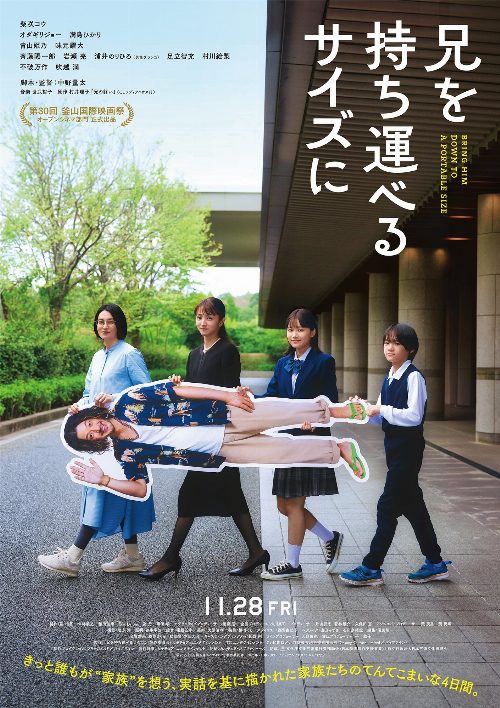
About Bring Him Down to a Portable Size
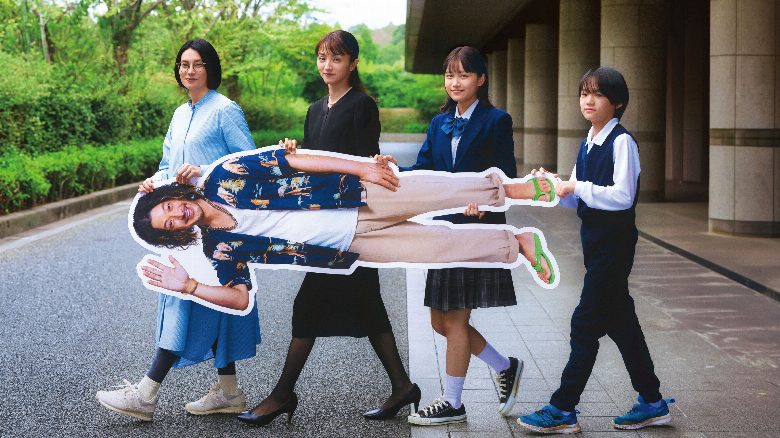
Four hectic days unfold as a family reunites after the death of the world’s most troublesome big brother.
Grief often manifests in the oddest of domestic frictions, a reality Ryota Nakano masterfully explores in his latest feature Bring Him Down to a Portable Size. Far from the typical sentimental depictions of loss found in mainstream cinema, this Japanese drama leans into the uncomfortable, often absurd friction that arises when estranged relatives are forced into proximity by a shared tragedy. By focusing on the chaotic ripple effects caused by the passing of a notoriously difficult sibling, the film strips away the performative mourning expected in such scenarios. Instead, it offers a raw, granular look at the baggage that accumulates over decades of sibling rivalry and familial misalignment.
For those who follow the trajectory of contemporary Japanese independent cinema, the presence of Joe Odagiri in the ensemble provides an immediate hook, as he consistently elevates character studies that prioritize human messiness over clean narrative arcs. Nakano, known for his keen eye on family dynamics, utilizes a tight four-day window to heighten the tension, turning a simple reunion into a pressure cooker of unspoken resentment and long-buried grievances. The film feels particularly resonant in an era where global audiences are increasingly gravitating toward grounded, character-driven dramas that bypass high-concept spectacle in favor of psychological depth. It is a work that captures the specific, prickly cadence of Japanese domestic life, where politeness often masks profound emotional fatigue.
Viewers who appreciate the understated, observational style of directors like Hirokazu Kore-eda will likely find much to admire here. The film does not ask the audience to sympathize with the deceased, nor does it demand that the surviving family members find a neat resolution to their fractured history. Rather, it invites viewers to observe the process of downsizing a person’s legacy—both metaphorically and literally—as the family navigates the logistics of death while grappling with the lingering influence of a disruptive personality. It is a thoughtful exploration of how we reconcile the versions of people we loved with the versions that caused us pain. This is a must-watch for cinephiles who prefer their emotional catharsis served with a side of sharp, observational wit, proving that even the most difficult lives leave behind stories that demand to be sifted through, regardless of how inconvenient that process may be.