About Confession
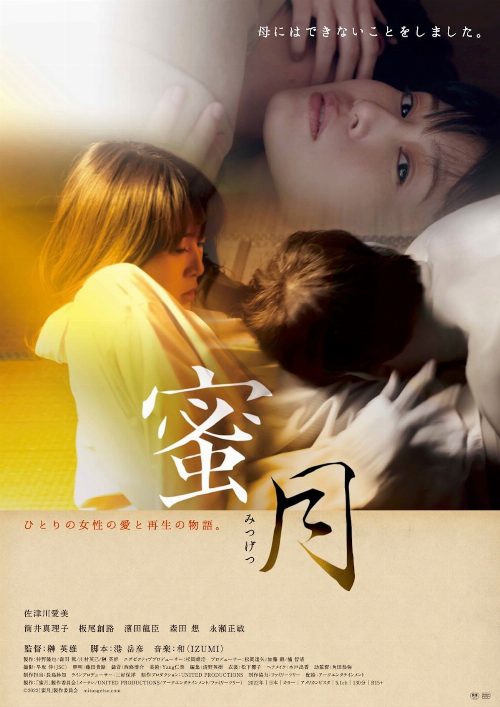
In the silent mountains, surrounded by beautiful mountains on all sides. A man carrying an urn, Iori Kano, appears in front of Mizuki Takahashi, a beautiful woman staring at the fire of a kiln in a humble workshop. Iori is Mizuki's brother-in-law. He has come to inform Mizuki of the death of her mother, Isuzu Kano. For some reason, Mizuki had abandoned her parents' home and was now living a peaceful life with her husband, ceramic artist Tetsuro Takahashi. Iori's appearance cuts through that peace and brings her back to the dark past. Mizuki has been living her life with her past hidden away, but her guilt for Yasuo, her father-in-row, who she had driven to his death, and her love and hate for Isuzu, who she had never reconciled with, lingered deep in her heart. This sense of guilt over her own deeds eventually condemns Mizuki in the form of the ghost of Isuzu, and finally leads her down the path of destruction.
The quietude of a remote mountain workshop provides the haunting backdrop for Confession, a Japanese drama that masterfully explores the inescapable nature of family trauma. While Indian cinema often leans into grand emotional operatics when addressing domestic secrets, this film opts for a stark, minimalist approach that feels distinctly grounded in the traditions of Japanese psychological storytelling. At its center is Mizuki, a woman whose fragile peace as the wife of a ceramic artist is shattered by the arrival of her brother-in-law bearing news of a death. The narrative functions as a slow-burning character study rather than a conventional thriller, focusing on the internal landscape of a woman forced to confront the ghosts of her own history.
Director Hideo Sakaki crafts a chilling atmosphere where the stillness of nature contrasts sharply with the turbulence of the protagonist’s psyche. For audiences accustomed to the high-stakes family dramas of the Telugu or Hindi film industries, this movie offers a fascinating study in restraint. It avoids the loud confrontations typical of many regional melodramas, choosing instead to let the weight of unspoken resentment and buried guilt do the heavy lifting. The film is perfectly suited for viewers who appreciate slow-cinema aesthetics and narrative depth, as it prioritizes the slow erosion of a character’s defenses over rapid plot progression. It is a contemplative experience that asks how long one can truly bury the consequences of past actions before they manifest as a personal reckoning.
The relevance of the cast, particularly the seasoned performance of Mariko Tsutsui, elevates the material beyond a simple domestic tragedy. Her portrayal of a woman caught between the life she built and the blood ties she fled adds a layer of vulnerability that keeps the audience engaged throughout the mounting tension. As the story unfolds, it becomes clear that the film is not merely about death, but about the exhausting labor of maintaining a facade. By stripping away the distractions of a busier urban setting, the director forces both the character and the viewer to sit with the uncomfortable reality of reconciliation. This is a must-watch for those who enjoy films that linger in the mind long after the credits roll, serving as a reminder that the most dangerous secrets are often the ones we tell ourselves to survive.