Jazz G Men(2011)
About Jazz G Men
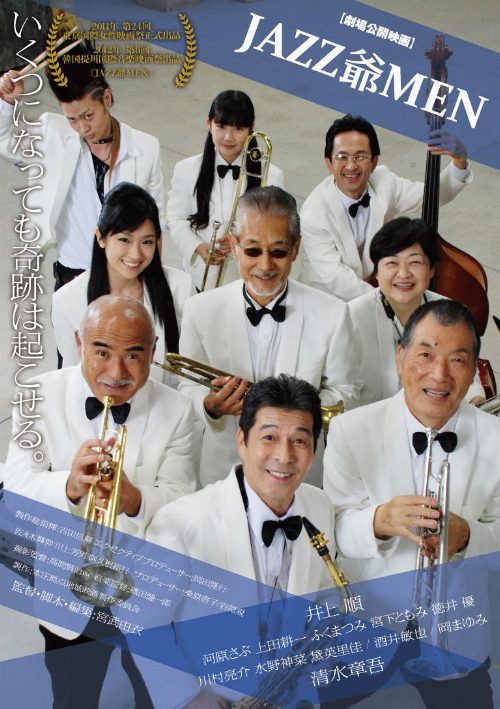
In a bid to bring back life to their town after seeing its population dwindle in recent years, the manager of a shopping mall in northern Saitama Prefecture and the executive director of the Honjo Chamber of Commerce start a project to put together an improvised jazz band from local citizens. A former music teacher (Shimizu Shogo) is coerced into becoming the band leader, but the other prospective members are all elderly amateurs with little knowledge of music.
The fading heartbeat of a quiet northern Saitama town finds an unlikely rhythm in the 2011 drama Jazz G Men, a film that explores the intersection of community spirit and creative rejuvenation. Rather than relying on the high-octane spectacle often associated with modern commercial cinema, this Japanese feature turns its lens toward the quiet desperation of a shrinking demographic. The narrative centers on a desperate attempt to revitalize a stagnant shopping district through the power of music, specifically by forming a jazz ensemble composed entirely of local retirees. It is a quintessential underdog story that swaps athletic grit for the gentle, often humorous struggle of non-musicians attempting to find their groove, highlighting the poignant reality of aging populations in Japan.
For audiences accustomed to the vibrant, high-energy storytelling prevalent in contemporary Indian cinema, where ensemble casts often drive larger-than-life narratives, Jazz G Men offers a refreshing shift in scale. The film shares a thematic DNA with heartwarming regional dramas that celebrate human connection over grand heroism. By placing the burden of cultural revival on the shoulders of an inexperienced group of amateurs and a reluctant former music teacher, the director taps into a universal sentiment about finding purpose in one's golden years. The chemistry between the cast members, including Shogo Shimizu as the begrudging mentor, grounds the film in an authentic, lived-in reality that feels both humble and deeply resonant.
This production is specifically crafted for viewers who appreciate character-driven narratives that prioritize emotional stakes over plot-heavy twists. It stands out in the landscape of regional dramas by eschewing melodrama in favor of a measured, observational style that mirrors the slow pace of the town it depicts. Those who enjoy stories about the transformative power of art, particularly when it serves as a bridge between generations or a tool for civic healing, will find plenty to admire here. As a piece of cinema, it serves as a gentle reminder that even in the most overlooked corners of the world, a simple collective effort can spark a newfound sense of belonging. It is a thoughtful exploration of how rhythm and melody can harmonize a fractured community, making it a compelling watch for anyone interested in the quiet, persistent resilience of the human spirit.
Cast(12)