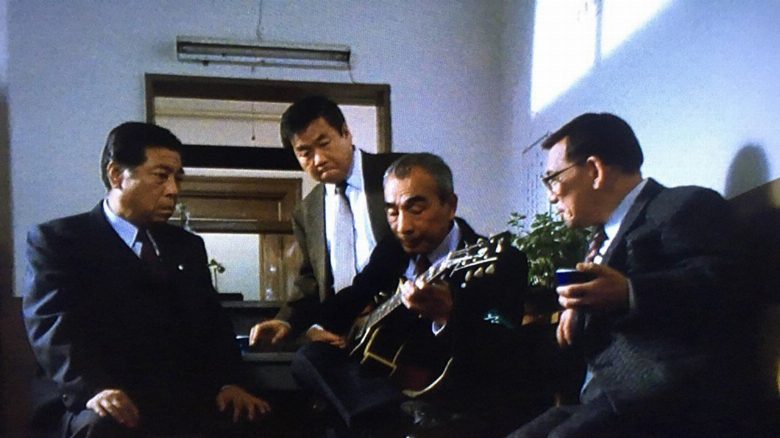

Kaisha monogatari: Memories of You(1988)
About Kaisha monogatari: Memories of You
A hard-working section chief, fast approaching retirement and beset by stress from all directions, joins a jazz band and reignites his youthful passion for the music, giving him a chance to set things right in his life.
The sunset years of a corporate salaryman often become a landscape of quiet resignation, yet Kaisha monogatari: Memories of You offers a vibrant, rhythmic rebellion against the status quo of mid-century Japanese professional life. While contemporary audiences familiar with the high-octane emotional beats of modern Indian cinema might expect a grand melodramatic spectacle, this 1988 feature leans into a more nuanced, observational style that captures the heavy burden of societal expectations. The narrative centers on a weary executive who finds an unexpected sanctuary in the syncopated pulse of a jazz ensemble. By trading the stifling silence of a boardroom for the improvisational freedom of music, the protagonist embarks on a journey that feels deeply resonant for anyone currently grappling with the tension between duty and personal fulfillment. It is a film that speaks to the universal struggle of rediscovering one’s identity long after the world has decided who you are.
Within the broader spectrum of global cinema, this film serves as a fascinating companion piece to the character-driven dramas that have recently seen a resurgence in international film circles. The Japanese approach to storytelling here eschews the rapid-fire editing often found in current blockbuster hits, choosing instead to let the weight of the protagonist's exhaustion settle into the frame. For those who appreciate the subtle, character-focused storytelling found in the best of Malayalam or slow-burn Tamil indie dramas, this movie provides a masterclass in patient pacing. It captures the specific cultural anxiety of the corporate ladder, a theme that has become increasingly relevant across Asian film industries as the lines between personal passion and economic necessity continue to blur. It is a thoughtful exploration of how a long-suppressed hobby can act as a catalyst for a total life recalibration.
Viewers who enjoy narratives about second chances or the transformative power of art will find much to admire in this production. The film does not merely function as a musical drama but rather as a poignant character study that asks whether it is ever truly too late to rewrite one's own history. By focusing on the intersection of professional stagnation and creative liberation, the director invites the audience to consider their own hidden aspirations. It is an ideal pick for cinephiles who seek films that prioritize emotional authenticity over flashy spectacle. Whether you are a fan of classic international cinema or simply someone interested in the evolution of the salaryman archetype, this story remains a compelling reminder that the music of one's youth never truly fades, provided one is brave enough to pick up the instrument again.
Cast(32)