About Lifetime Insecurity
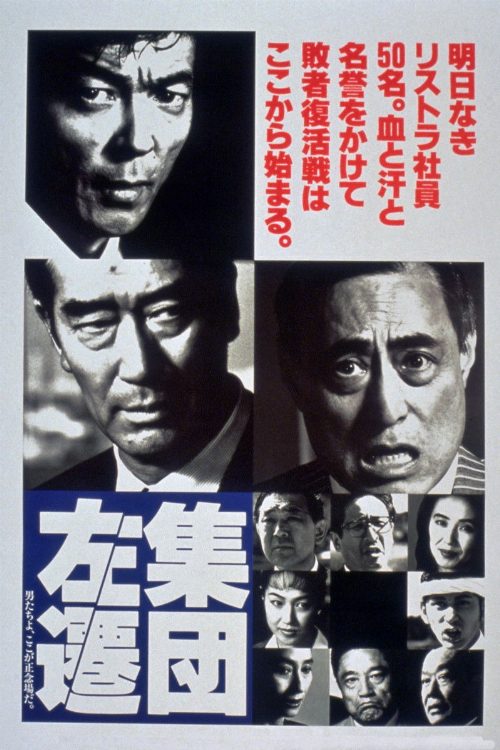
In the midst of a bad economy, Yokoyama, the vice president of Taiyo Real Estate, launches a plan to cut back on his labor force. Fifty employees are segregated into a special assignment division and given an ultimatum: meet a sales goal of 1.5 billion yen within three months or be fired. Spiteful of their unjust treatment, two men, Shinoda and Takigawa, take up the battle against the ruthless Yokoyama.
The mid-nineties in Japanese cinema often reflected a society grappling with the abrupt collapse of its economic bubble, and Lifetime Insecurity captures this anxieties with a uniquely caustic wit. Rather than opting for pure tragedy, the film functions as a darkly comedic indictment of corporate rigidity, positioning the workplace as a pressure cooker where human dignity is pitted against brutal bottom-line metrics. By focusing on the absurd ultimatum handed down to a group of marginalized employees at Taiyo Real Estate, the narrative explores the fragility of middle-class stability when it is weaponized by those in power. It occupies a fascinating space in the era's filmography, blending the rigid hierarchies of the salaryman culture with the kind of rebellious spirit that resonates with anyone who has felt like a cog in a failing machine.
The strength of the film lies in its character dynamics, particularly the friction between the cold, calculated ambition of the executive suite and the desperate camaraderie of the staff members facing termination. Masahiko Tsugawa brings a sharp, commanding presence to the screen, grounding the high-stakes boardroom conflict in a performance that feels both grounded and deeply cynical. As the protagonists, Shinoda and Takigawa, navigate the impossible challenge of their sales quotas, the audience is invited to witness a game of corporate chess where the rules are constantly shifting to ensure the house always wins. This creates a compelling tension that carries the narrative, transforming mundane office politics into a high-stakes psychological battle that feels surprisingly relevant even decades later.
Viewers who enjoy sharp social satires or films that dissect the toxicity of corporate environments will find this an essential watch. It serves as a time capsule of a specific economic turning point, yet the themes of job insecurity and the dehumanizing nature of extreme performance pressure remain universal. It is not merely a drama about business failure but a story about the resilience of individuals pushed to the brink by an unyielding system. Those who appreciate the grounded, character-driven storytelling typical of Japanese mid-nineties dramas will likely find the film’s blend of irony and earnest defiance highly engaging. By choosing to highlight the human cost of economic downturns through a lens of biting humor, the film manages to be both an entertaining narrative and a poignant critique of the structures that define our working lives.
Cast(11)