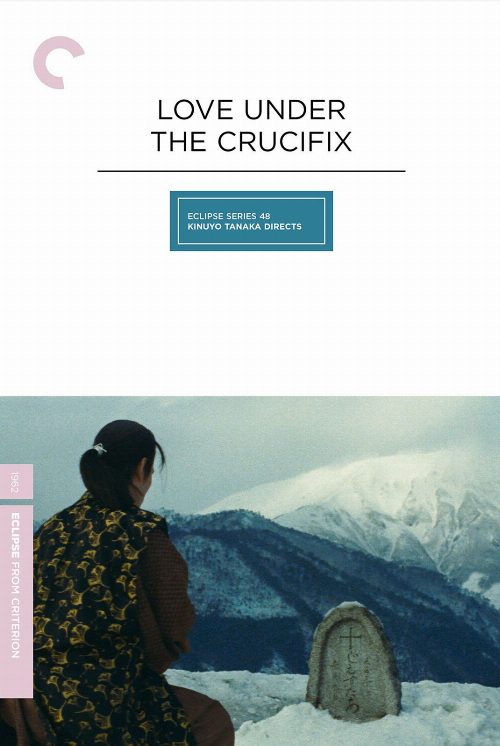
Love Under the Crucifix(1962)
About Love Under the Crucifix
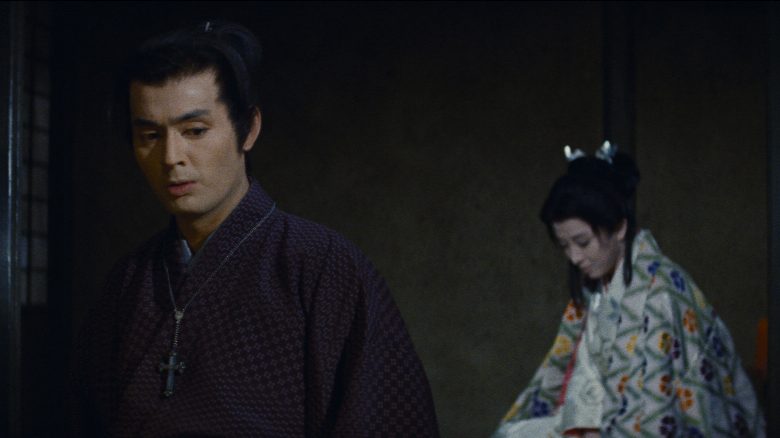
A tea master and his daughter Ogin are both Christians in feudal Japan. Ogin falls in love with a married feudal prince who shares her faith. When the Shogun bans Christianity, the situation worsens.
Kinuyo Tanaka directs a profound exploration of faith and forbidden longing in the 1962 period piece Love Under the Crucifix, a film that captures the precarious existence of hidden believers in a changing Japanese landscape. Set during an era when the Tokugawa shogunate moved to suppress foreign religious influence, the narrative centers on the daughter of a renowned tea master whose life becomes inextricably linked with a powerful nobleman. By juxtaposing the refined, quiet tradition of the tea ceremony against the turbulent political climate of the seventeenth century, the film examines how personal conviction can become a dangerous act of defiance. This is not merely a historical romance but a study of the sacrifices required when private morality clashes with the iron will of a state determined to enforce absolute cultural conformity.
The film stands out for its delicate balance of aesthetic beauty and emotional gravity, characteristic of the era of Japanese cinema that sought to reconcile traditional period drama elements with modern anxieties about identity and state power. For audiences familiar with the intense character studies of the 1960s, the performance by Tatsuya Nakadai offers a compelling anchor, bringing a nuanced vulnerability to the role of a man trapped between his social status and his spiritual alignment. The inclusion of the Christian subtext adds a layer of intellectual intrigue that distinguishes it from more conventional jidai geki, or period dramas, which often focused purely on samurai honor or strategic warfare. It invites viewers to consider the cost of maintaining one’s integrity in a society where deviation from the accepted orthodoxy is treated as a grave threat to national stability.
Cinema enthusiasts interested in how international religious movements were interpreted through the lens of Japanese social structures will find this work particularly resonant. It serves as an essential companion to other mid-century dramas that interrogated the relationship between the individual and the collective. Whether one is drawn to the meticulous period production design or the complex psychological evolution of the lead characters, Love Under the Crucifix provides a haunting look at a marginalized community forced to choose between earthly comfort and the dictates of their conscience. It remains a poignant, visually arresting reminder of the fragility of peace during times of systemic intolerance, making it a timeless watch for those who appreciate historical storytelling that prioritizes moral nuance over simple heroics.
Cast(8)