About Reason For Not Divorcing
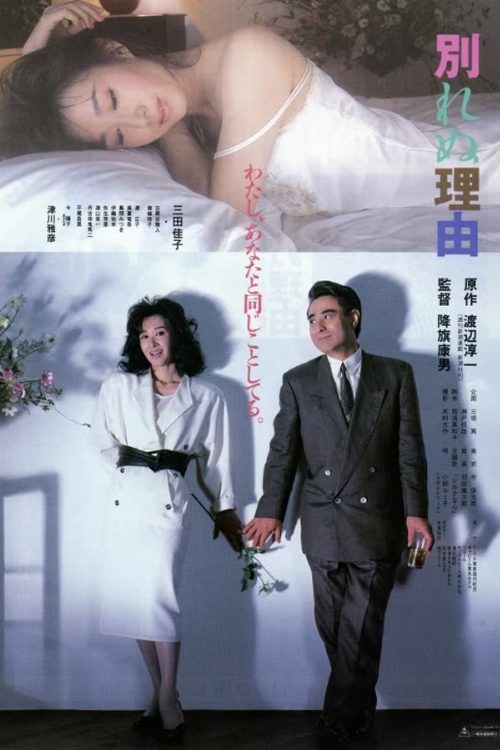
Yoshiko Mita and Masahiko Tsugawa enthusiastically perform a couple who know each other’s affairs and affairs and still do not part with each other even after various emotional conflicts. A work that is highly supported by women.
The delicate architecture of a long-term marriage is rarely as sturdy as society demands, a reality captured with poignant precision in the 1987 Japanese drama Reason For Not Divorcing. Directed by Yasuo Furuhata, a filmmaker known for his ability to navigate the complexities of human relationships with a gentle but firm hand, the film offers a piercing look at the unspoken compromises that keep a household intact. Unlike the melodramatic spectacles that often characterize divorce narratives, this story finds its strength in the quiet, stifling spaces between two people who have long since stopped pretending their union is perfect. By focusing on the endurance of a couple fully aware of each other’s external entanglements, Furuhata invites the audience to consider whether the institution of matrimony is defined by mutual fulfillment or merely the persistent refusal to walk away.
For viewers accustomed to the high-octane emotional shifts found in modern Indian cinema, where family dynamics often serve as the primary engine for grand, sweeping narratives, Reason For Not Divorcing provides a stark, minimalist contrast. In the current landscape of global cinema, where stories are increasingly eager to provide neat resolutions or moral judgments, this film remains refreshingly ambiguous. It appeals to those who appreciate character-driven dramas that prioritize psychological realism over plot-heavy twists. The performances by Masahiko Tsugawa and his co-stars are grounded in a weary familiarity that will resonate with anyone interested in the sociological underpinnings of domestic life. It avoids the temptation to paint its characters as purely victims or villains, instead portraying them as architects of their own comfortable, if complicated, cage.
The film stands out as a significant entry in the Japanese canon precisely because of its resonance with female audiences of the era, who saw their own invisible labors and suppressed anxieties reflected in the narrative. While it lacks the kinetic energy of a contemporary Telugu thriller or the stylization of a modern Hindi blockbuster, its relevance persists in its honest exploration of why people stay together when everything suggests they should leave. For the cinephile looking to explore the roots of interpersonal drama, Furuhata offers a masterclass in tone and restraint. It is a contemplative experience that challenges the viewer to look past the surface of a partnership and acknowledge the profound, often inexplicable reasons we choose to remain attached to the people who challenge us the most.