About Sex Zone
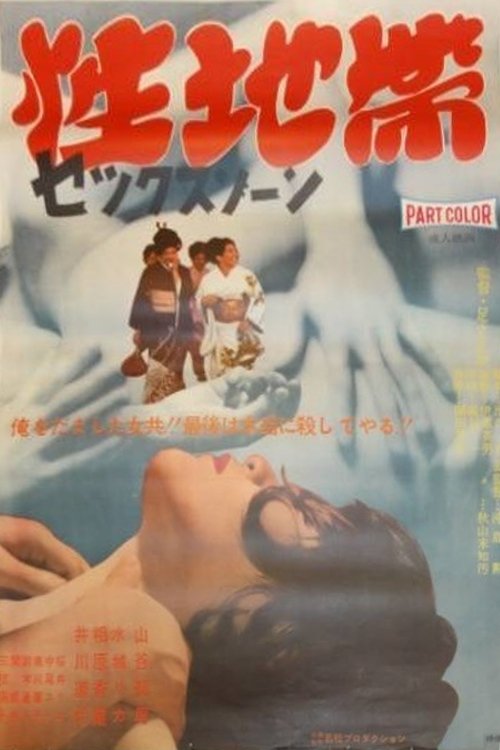
Inspired by the true story of a Geisha murdered in a city famous for its baths, Adachi forged here his favorite style, a kind of conceptual documentary recounting the incident in monotone. The same event that at the beginning of Violated Angels escaped every principle of causality, is portrayed here as a singular anti-spectacle.
Few filmmakers have navigated the intersection of avant-garde theory and exploitation cinema quite like Masao Adachi, and his 1968 work Sex Zone remains a haunting testament to his radical approach to storytelling. Rather than leaning into the sensationalist tropes typically associated with the Japanese pink film movement of the sixties, Adachi treats the grim reality of a real-life homicide with a cold, almost detached precision. By stripping away the conventional narrative flourishes that audiences of the era might have expected from a crime drama, he forces the viewer to confront the stark, chilling nature of the event itself. The film functions less as a traditional thriller and more as a conceptual exercise, utilizing a monotone aesthetic to emphasize the banality of violence within the insular world of bathhouse culture.
This project is a crucial piece of the puzzle for those interested in the evolution of Japanese independent cinema. It serves as a fascinating companion piece to Adachi's other explorations of trauma and social decay, showcasing his ability to transform a sordid headline into a deliberate anti-spectacle. While modern viewers accustomed to fast-paced genre films might find the pacing unconventional, cinephiles who appreciate the works of the Wakamatsu Production circle will recognize the signature stylistic defiance that defined the era. It is a work that demands patience, rewarding those who are prepared to look past the surface-level subject matter to engage with the director's unique structural interrogation of causality and memory.
Sex Zone stands out as a stark departure from the glossier studio productions of the time, positioning itself firmly within the realm of experimental drama. It does not aim to entertain in the populist sense, but rather to document a state of being, capturing the eerie atmosphere of a city defined by its steam-filled corridors and hidden transgressions. For students of global cinema, it provides a vital look at how political and social unrest in Japan influenced the aesthetic choices of underground directors. Those seeking a conventional mystery will likely feel disoriented, yet for an audience interested in the boundaries of film as an observational medium, this remains a provocative and intellectually demanding experience that feels just as uncompromising today as it did decades ago.
Cast(9)