About The Ballad of Narayama
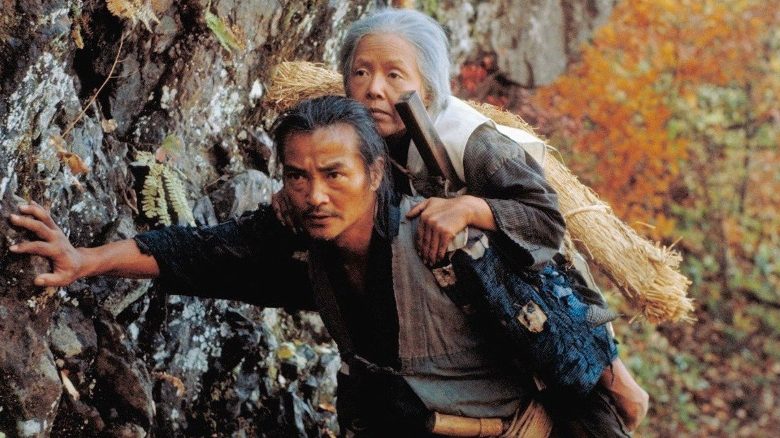
In a small village in a valley everyone who reaches the age of 70 must leave the village and go to a certain mountain top to die. If anyone should refuse they would disgrace their family. Old Orin is 69. This winter it is her turn to go to the mountain. But first she must make sure that her eldest son Tatsuhei finds a wife.
Shohei Imamura achieved a rare cinematic feat with The Ballad of Narayama, a film that manages to be both hauntingly grounded in the harsh realities of survival and deeply rooted in the folklore of rural Japan. While modern Indian cinema often explores the tension between ancestral traditions and the pressures of a rapidly modernizing society, this 1983 masterpiece offers a much bleaker, more primal look at how communities define their social obligations. Set within a remote, snow-covered valley where resources are scarce, the narrative examines the brutal logic of a village where reaching the age of seventy necessitates a final pilgrimage to the mountain peak. It is a stark study of human endurance that resonates with anyone interested in the anthropological roots of storytelling, standing as a pivotal work in world cinema that challenges viewers to confront the morality of communal survival versus individual affection.
The film distinguishes itself from other historical dramas through its unflinching commitment to showing the cyclical nature of life, death, and natural instinct. Rather than romanticizing the past, the director presents an environment where emotions are secondary to the collective hunger of the family unit. This approach invites comparisons to the gritty realism seen in the works of legendary filmmakers like Akira Kurosawa, yet it maintains a unique, almost documentary-like texture that makes the audience feel the biting cold and the weight of the social mandate. For fans of high-stakes cultural dramas, particularly those who appreciate the complex family dynamics often found in the best of Telugu or Malayalam parallel cinema, the film offers a mesmerizing look at how tradition can be both a binding force and a cruel master.
The performances, particularly that of Mitsuko Baisho, anchor the film in a profound sense of dignity despite the harrowing circumstances. It is a demanding watch, meant for those who prioritize thematic depth and atmospheric storytelling over conventional pacing. By focusing on the preparations of Orin as she navigates her final days, the story avoids becoming a mere tragedy, instead evolving into a contemplation on the legacy we leave behind. The film remains an essential touchstone for those exploring how different cultures depict the transition from life to death, proving that even in the most isolated settings, the fundamental struggles of human existence are universally recognizable. It is a testament to the power of regional storytelling to transcend borders, offering an experience that lingers in the mind long after the final frames fade into the mountain mist.
Cast(23)